
Die Löffelmühle
A place apart.
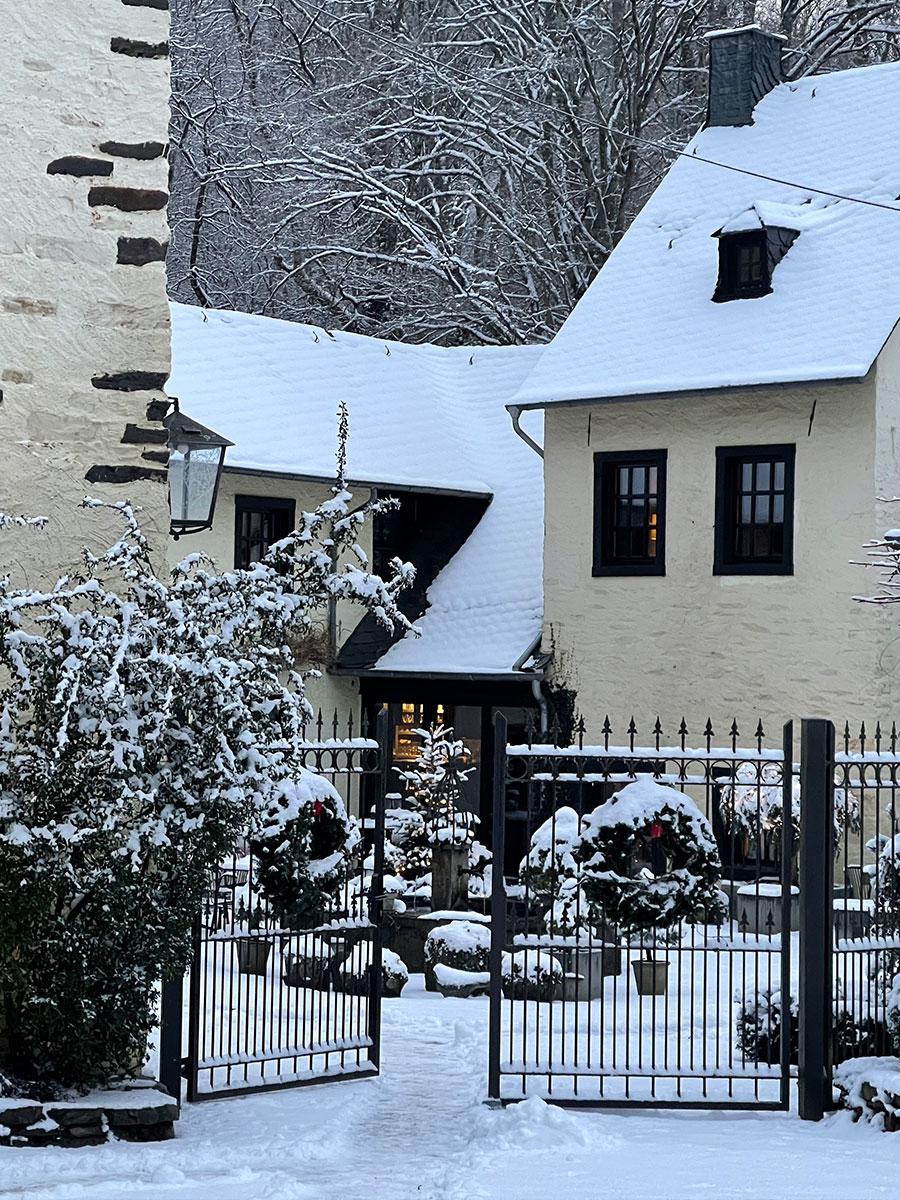
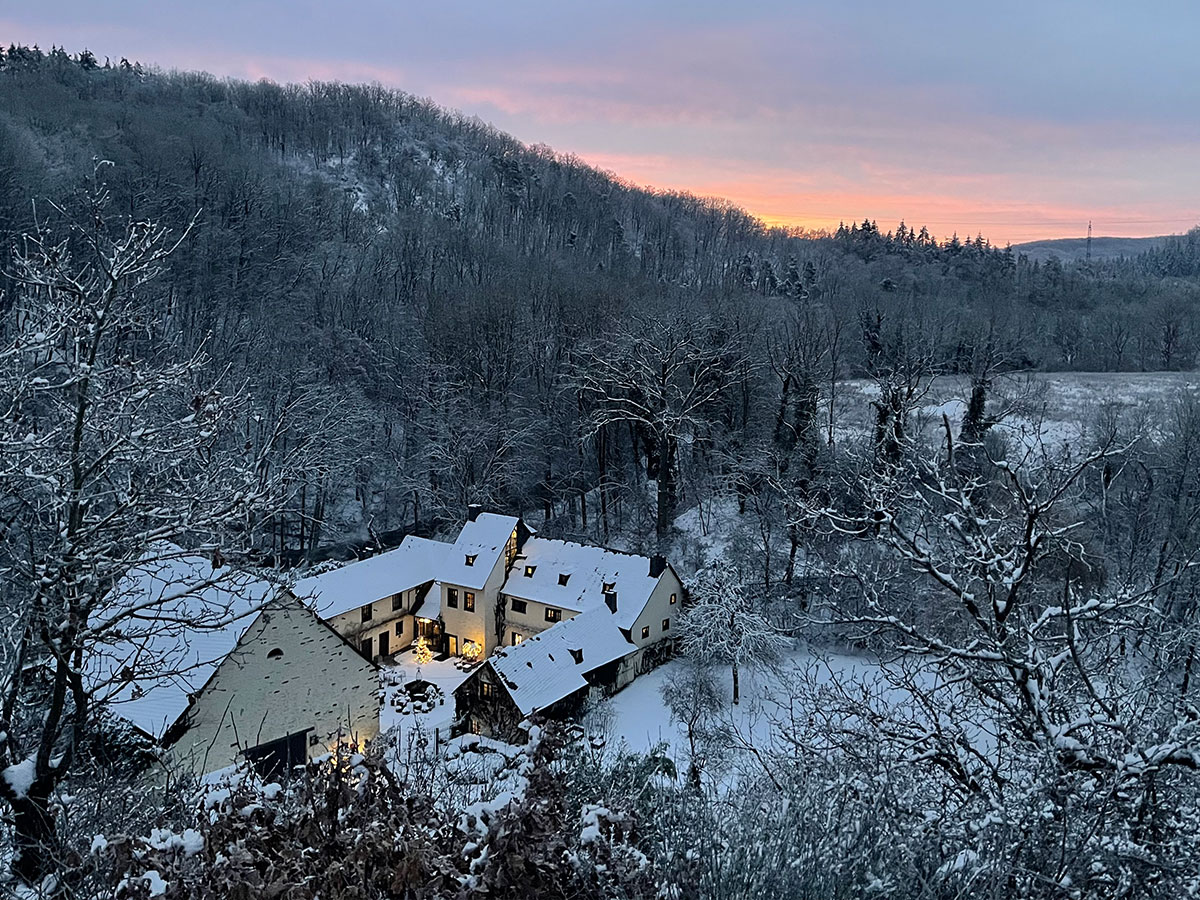
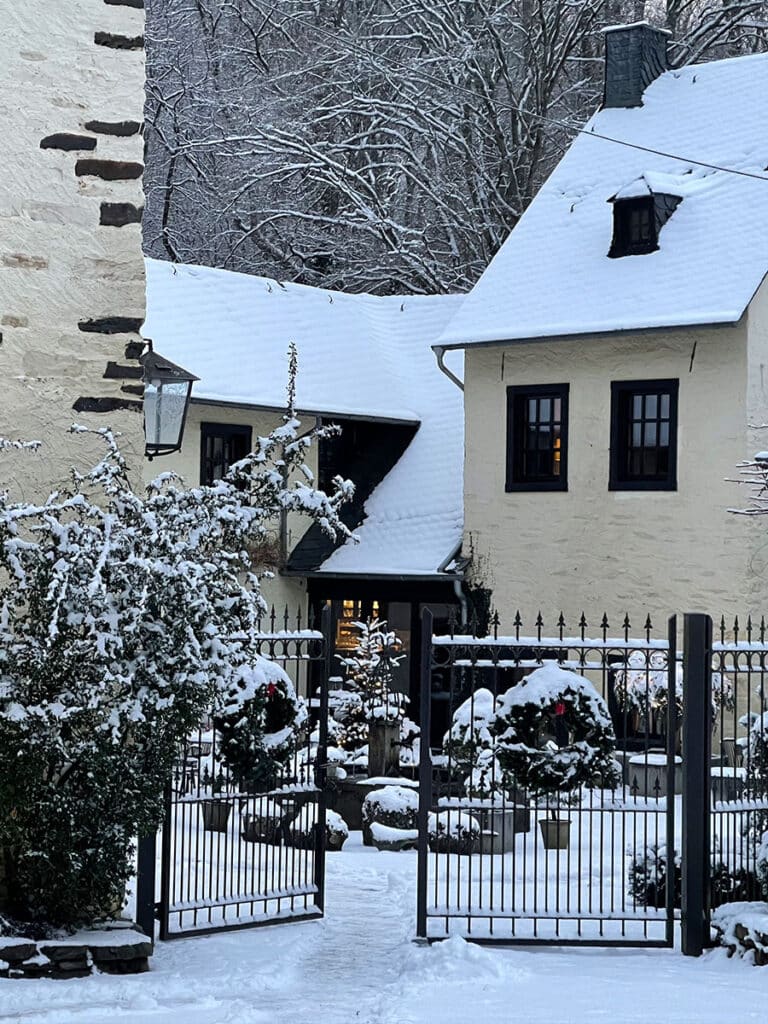
Walls dating back to 1450. Oak beams darkened by time. A stillness that has settled into every room. This house has welcomed many before — standing as it always has, among forest, water, and silence. A place for those who seek something rare. And find it here.
Jean-Paul Schmit and Roland Hein spent four years restoring the mill, bringing it back slowly, room by room. Today it is home – to them, to their animals, and to guests who arrive and wish to stay.
The History
Since 1450 — a mill that has endured.
The first written record dates to 8 November 1450, when Arnold and his wife Stine leased the "Leffelmole". They agreed to maintain the buildings, the mill machinery, and the pond. Each year at Martinmas, four malters of grain were owed to the monastery at Pillig. At the Feast of St Thomas, fish to the value of six Albus went to Ravengiersburg.
Den Nachkommen wurde ein Erbrecht zugesichert – die Mühle sollte ganz in einer Hand bleiben, nicht unter Geschwistern geteilt werden. So blieb sie durch viele Geschichtswirren hindurch im Besitz der Familie Schäfgen. Bis 1975.
Milling ceased in 1939. In the mid-1970s, the Dinger brothers renovated the property and sold it to the May family. In 2017, Jean-Paul and Roland took it on – and gave it new purpose.
(Source: Dorfchronik Pillig)

A New Chapter
An Other Eden.
For more than twenty years, Jean-Paul and Roland ran Eden, a flower shop in Luxembourg. Then they found something new — an old mill in the Elz valley, as if it had been waiting for them.
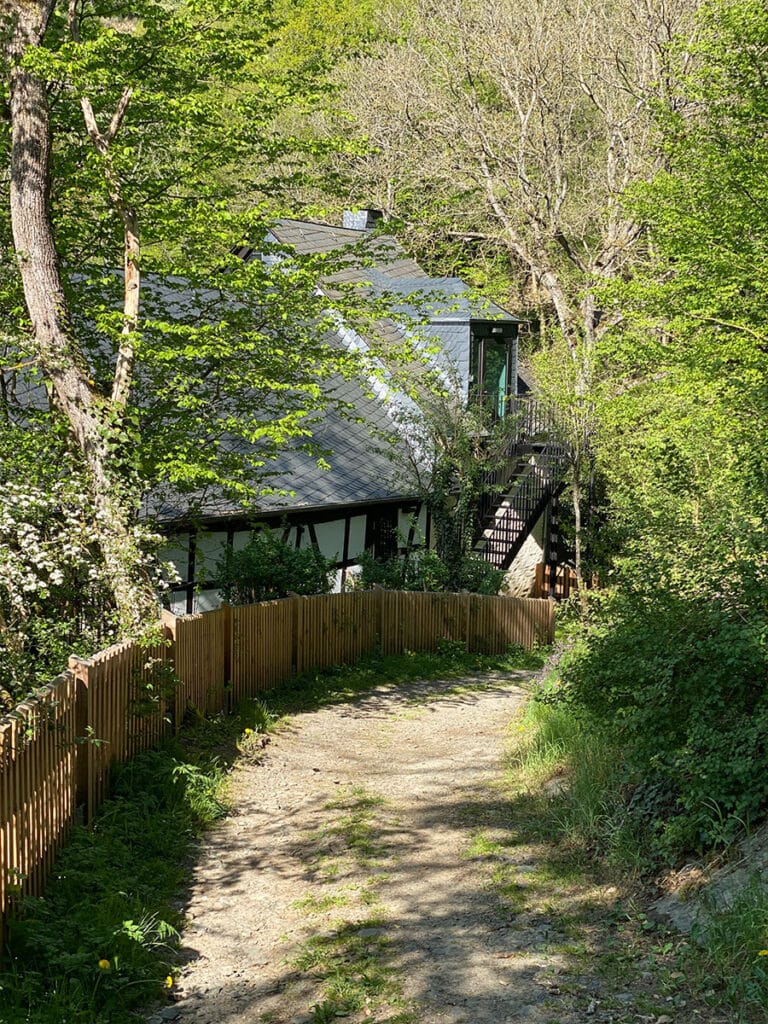
Four years of restoration. The mill became a retreat: one suite, three rooms. A lounge lined with books. A dining room beneath old beams. A sauna. A quiet room with an open fireplace.
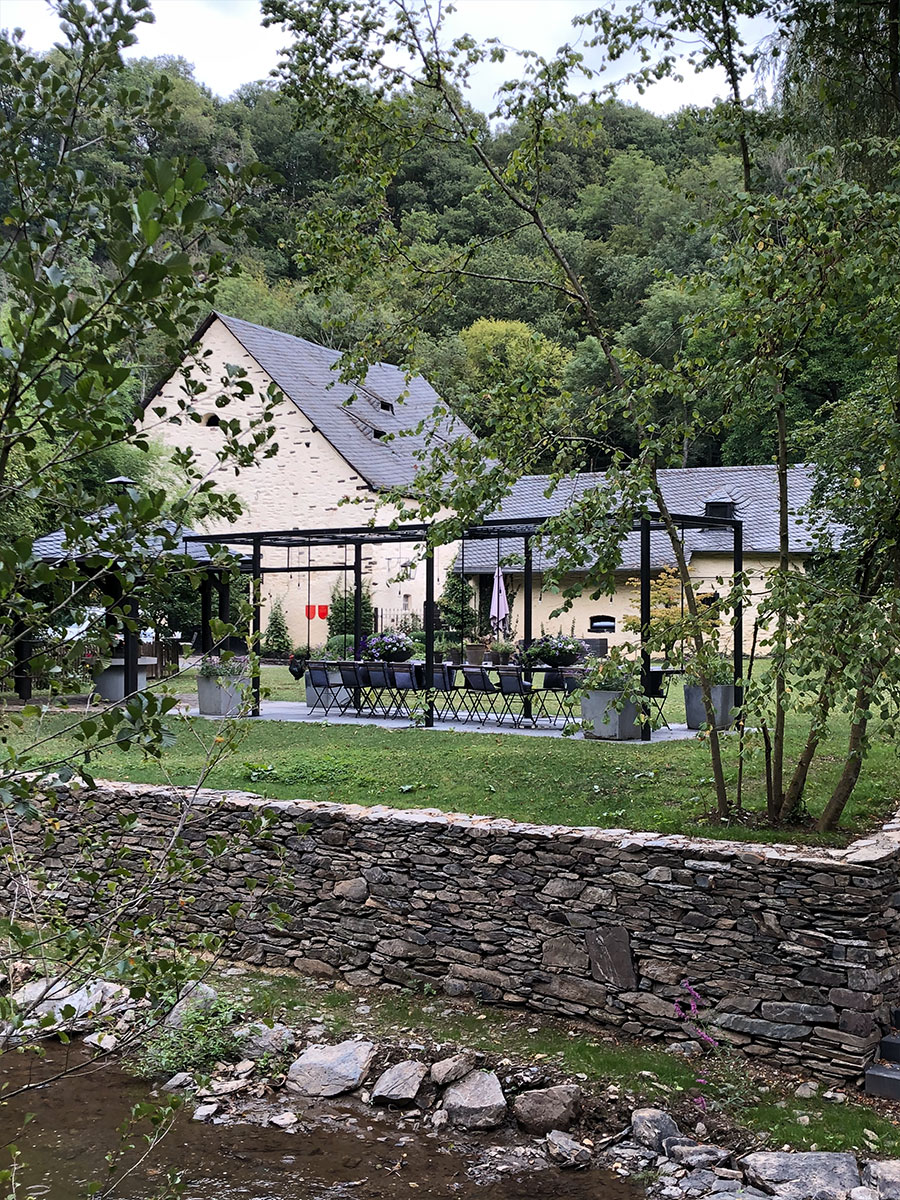
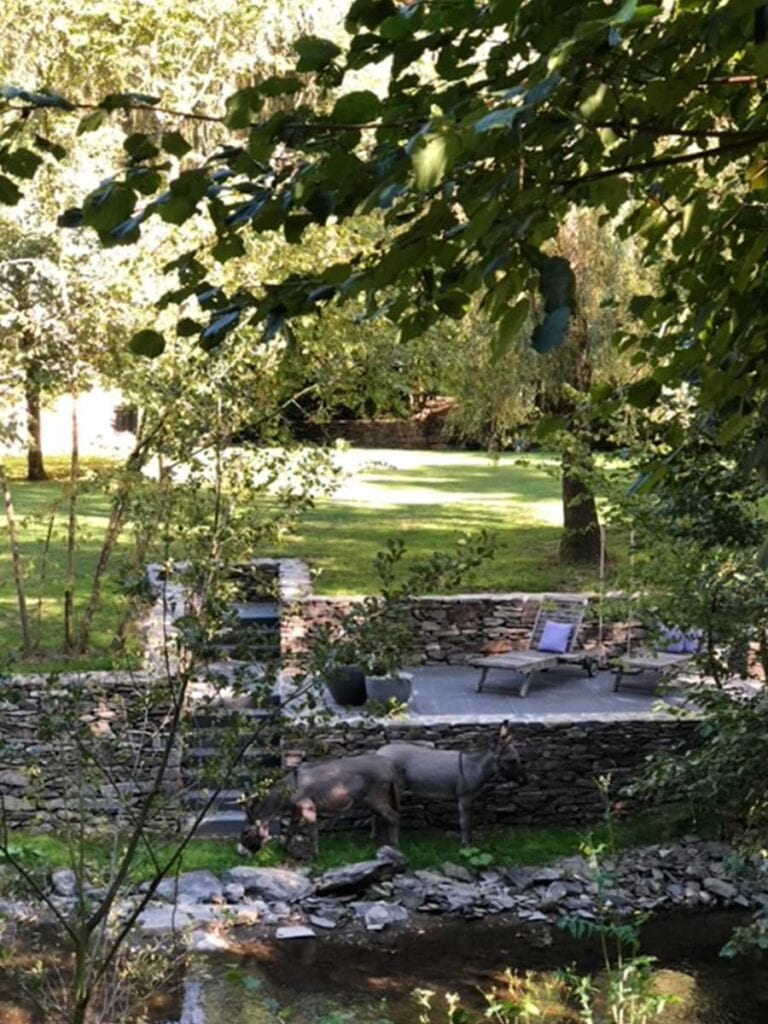
Beyond the walls, only nature. A terrace by the water's edge. The garden grows what appears on the table each evening. Donkeys graze in the meadow, chickens scratch in the courtyard, cats drift through the rooms.
For Our Guests
Rooms to arrive in.
Four rooms, each one different. A suite with a fireplace and views of the rocks. Rooms high among the treetops, close to the garden, looking out at the old oak. Each room has its own character.
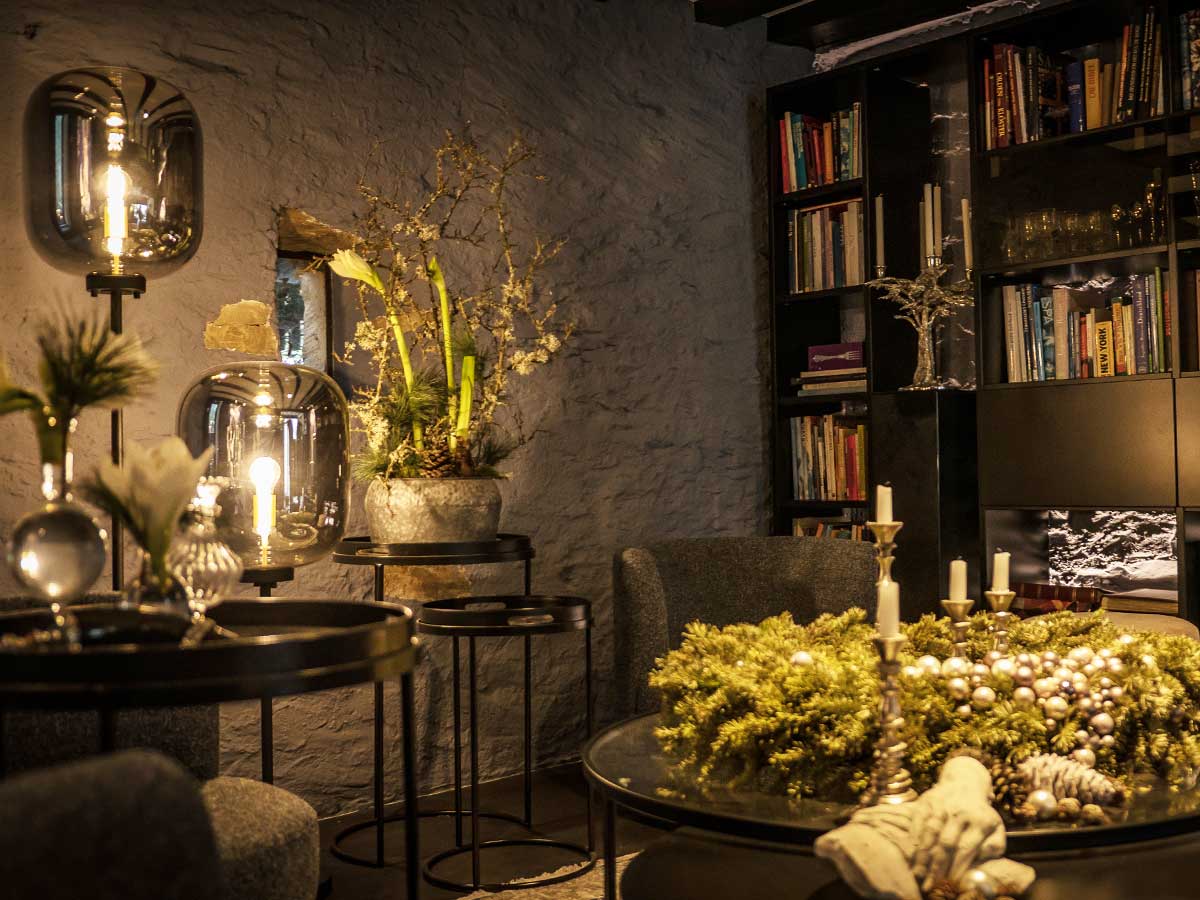
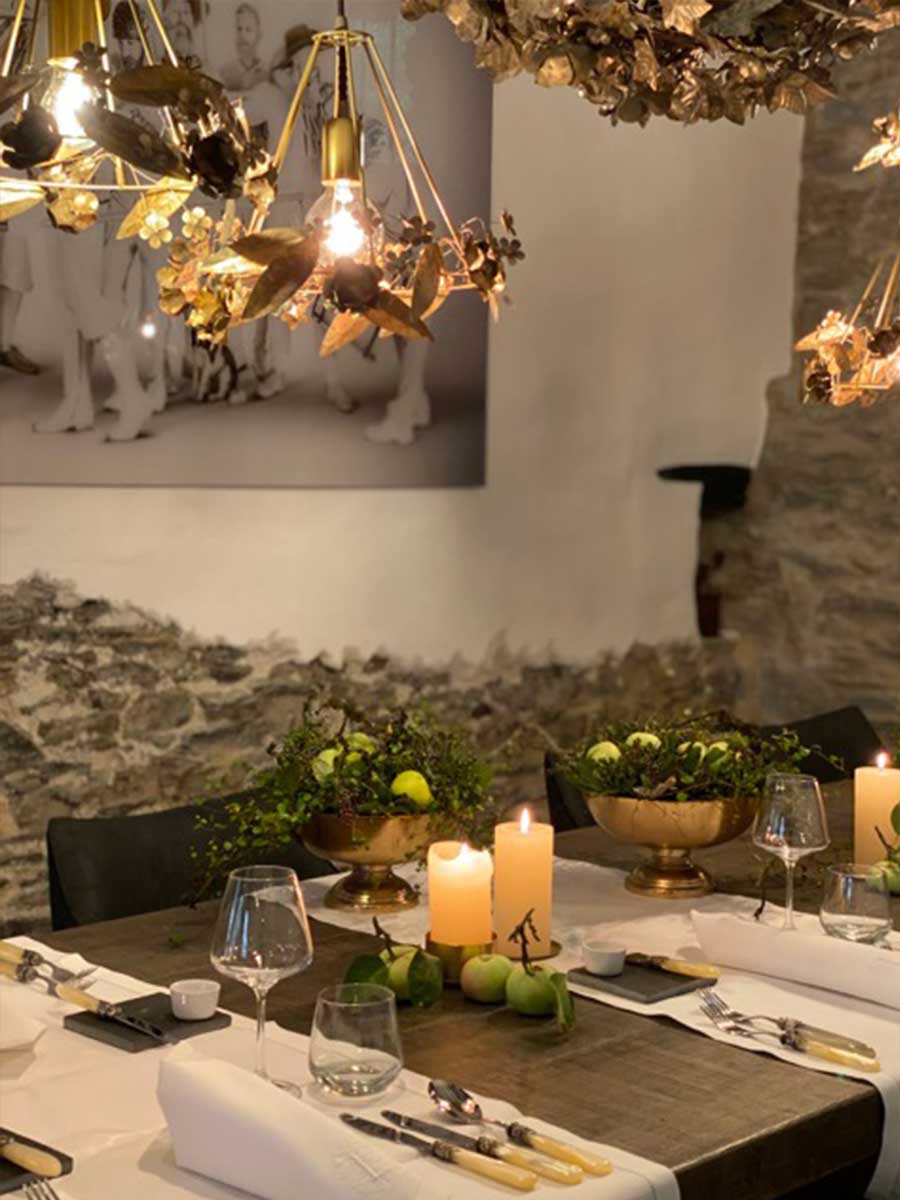
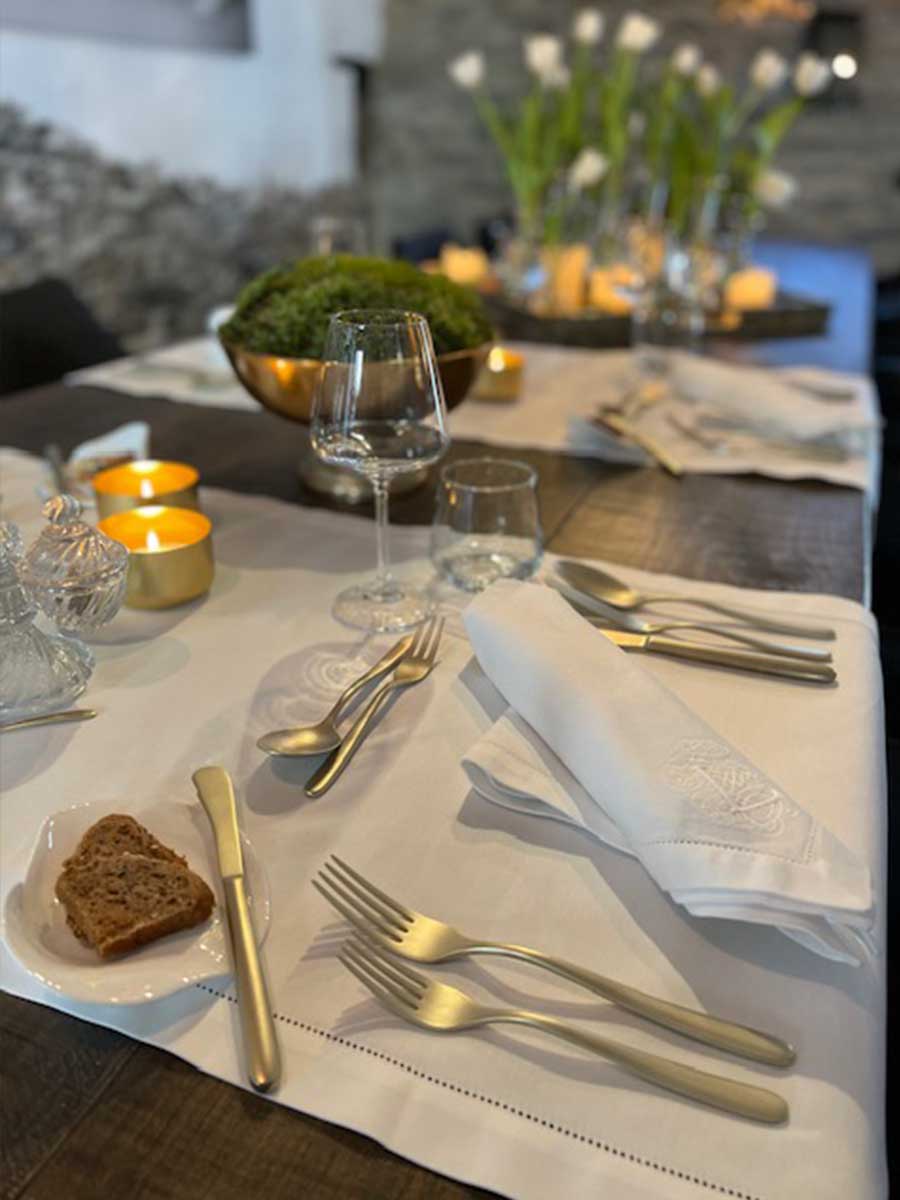
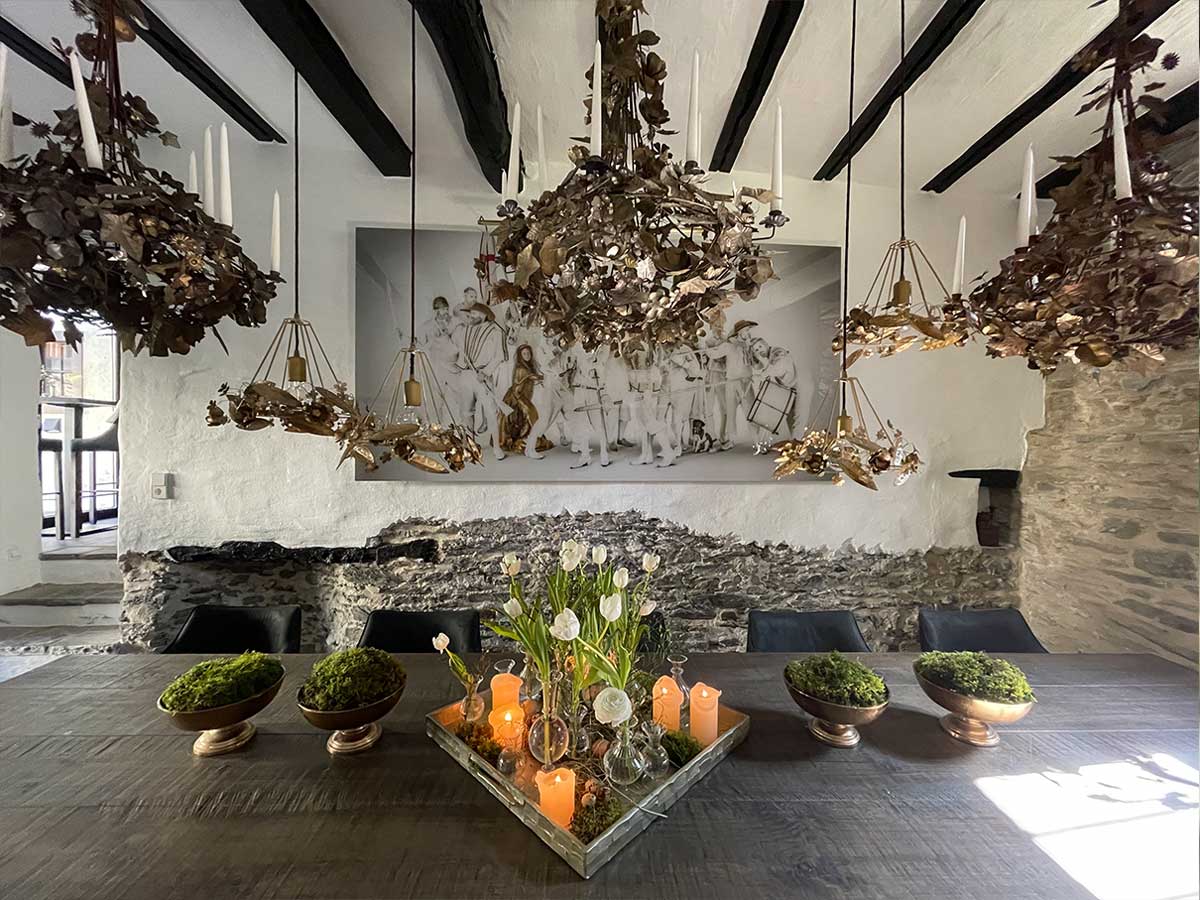
Dining Room, Lounge & Library
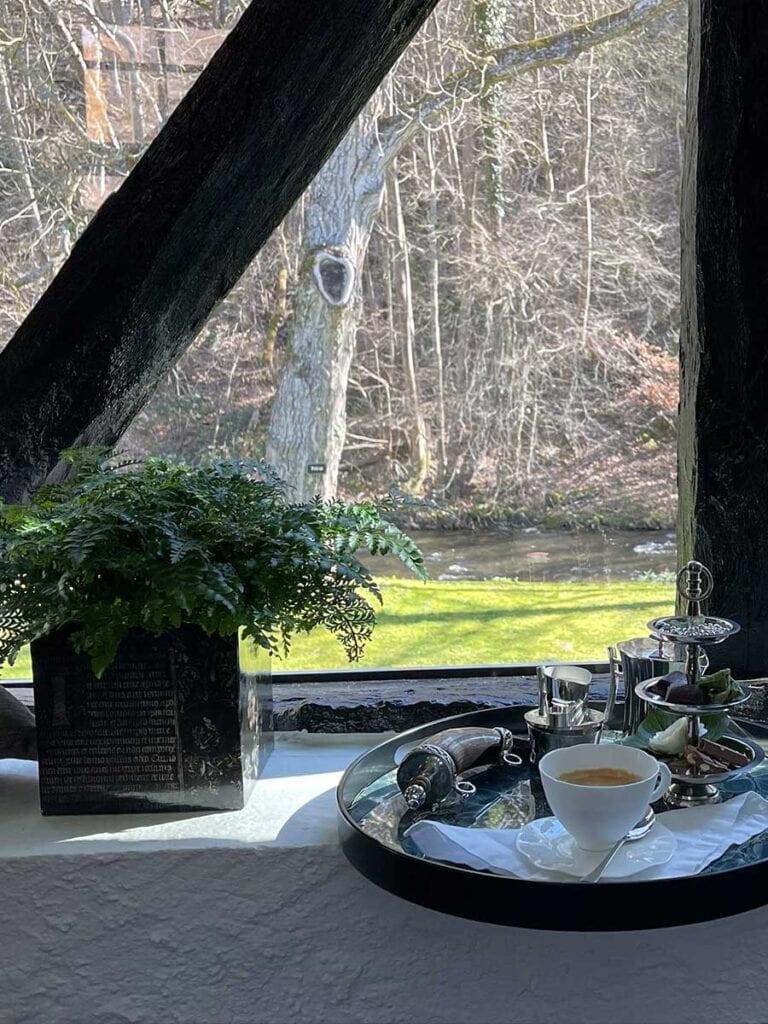
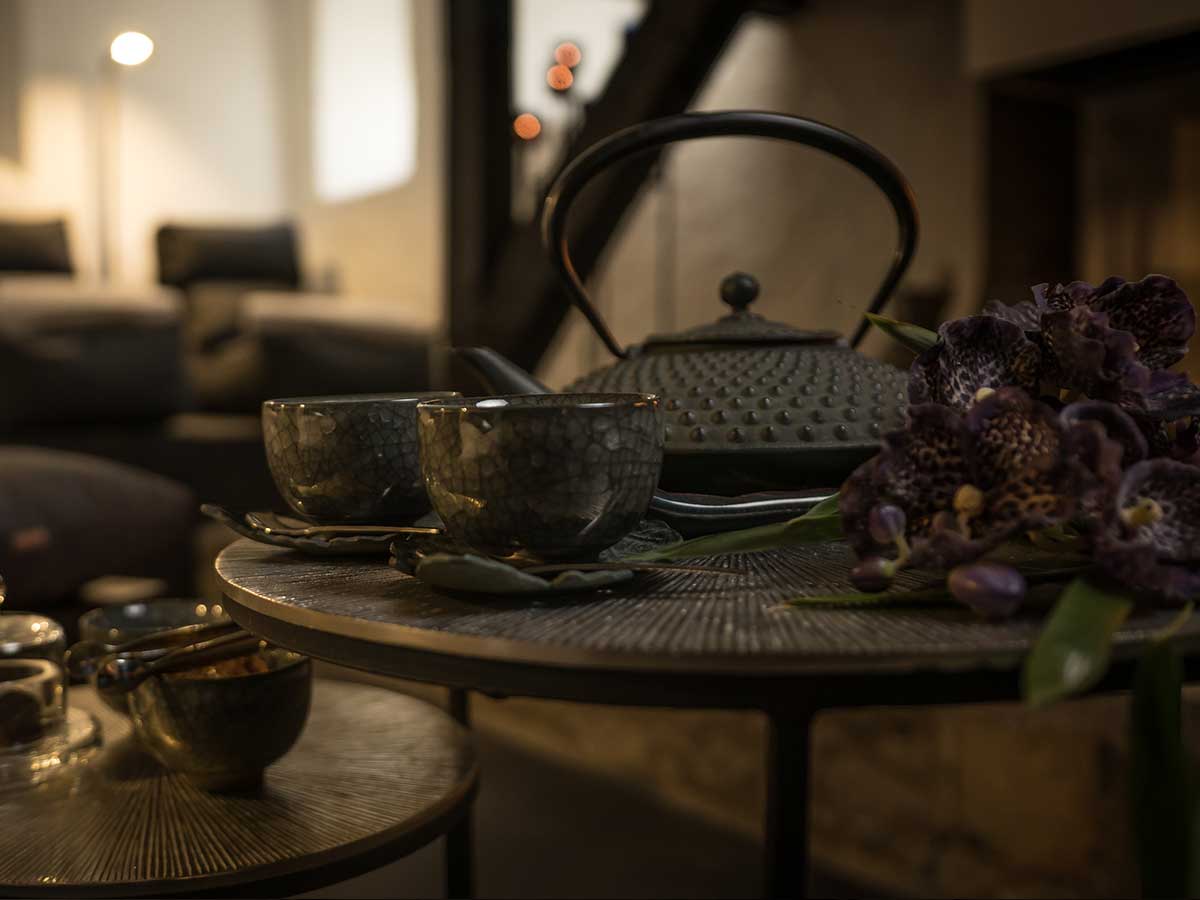
A place for the quiet moments. An aperitif before dinner, an afternoon coffee, a digestif as the evening fades. Tea from Althaus, served with small treats from the kitchen. Books waiting to be read. Nowhere else you need to be.
Two steps lead down into a room steeped in history. Old beams from Spain, chandeliers from Estonia, intricately worked with leaf motifs. On the wall, Rembrandt's The Night Watch, reinterpreted by Jonas Leriche.Zwei Stufen führen hinab in einen Raum, der Geschichten trägt. Altes Gebälk aus Spanien, imposante Kronleuchter mit filigranen Blattornamenten aus Estland, an der Wand Rembrandts "Nachtwache", neu interpretiert von Jonas Leriche.
When the smell of Jean-Paul's cooking drifts through the house in the evening, the table is set for you here. A surprise menu or the seasonal menu — whatever the garden and the season provide, accompanied by wines from our vaulted cellar. An evening that lingers.
Service ends at 10 pm. The lounge remains open until 10.30 pm.
Sauna & Quiet Room
Let the day drift away.
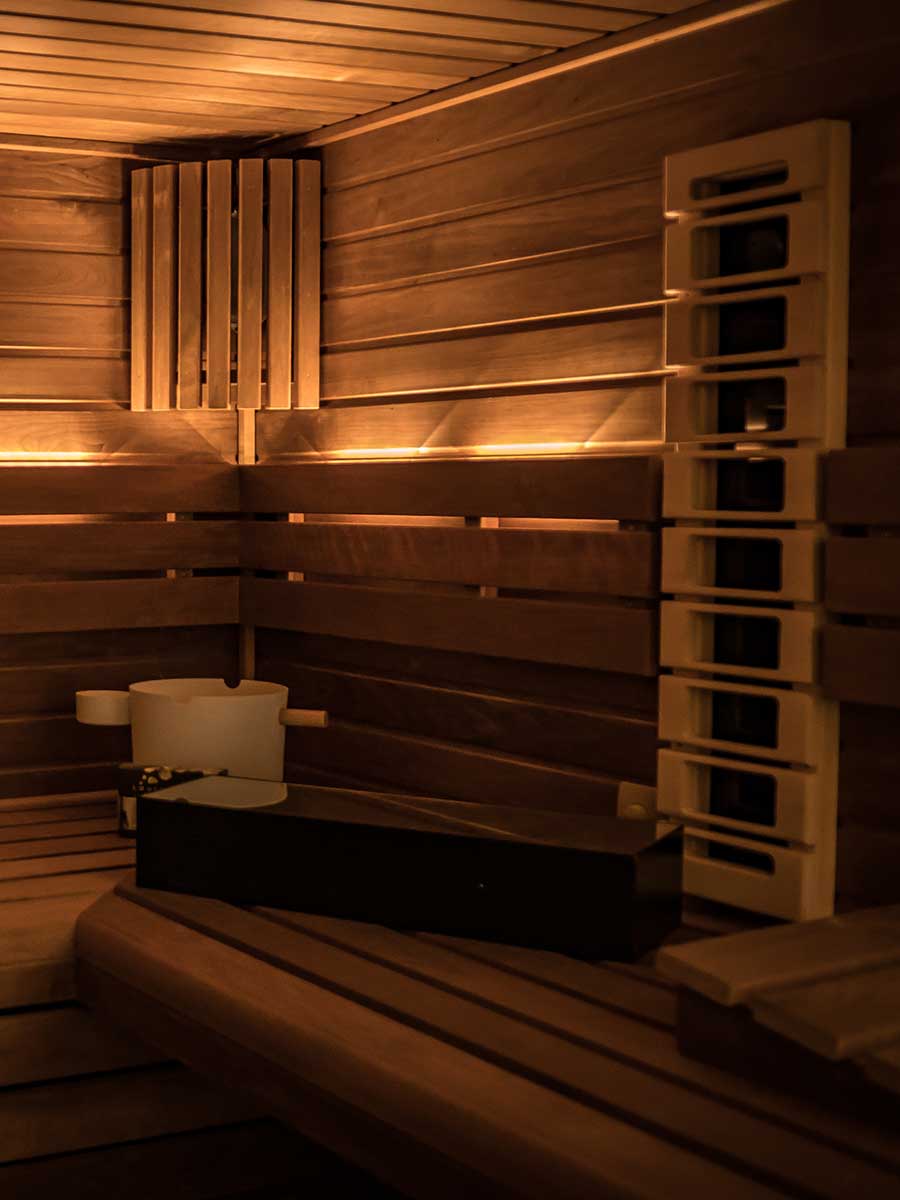
Heat that softens tired muscles and eases the body. The crackle of the fireplace in the room next door. After a walk along the Traumpfade trails — or simply because it feels right.
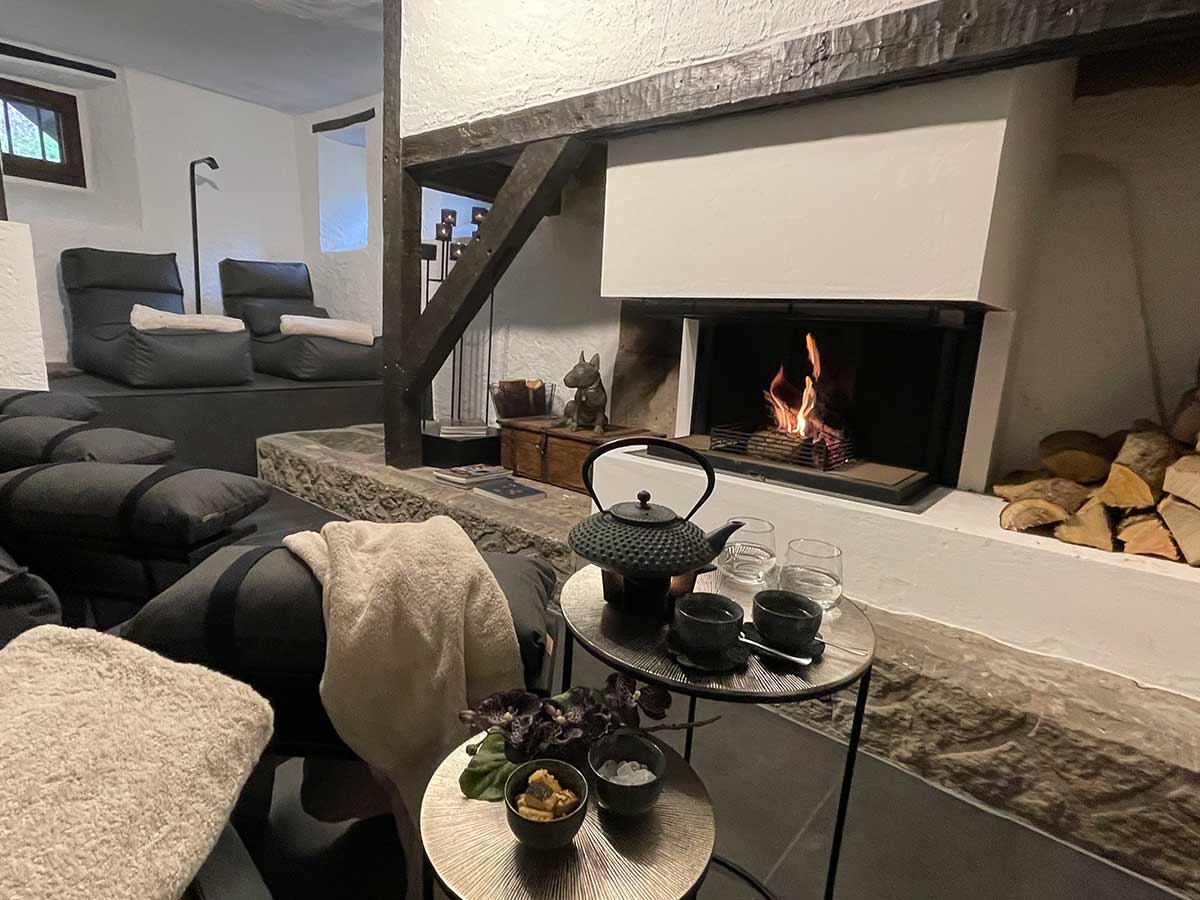
The sauna is available between 3 pm and 8 pm, for your exclusive use for ninety minutes. Afterwards, the quiet room awaits, with a large open fireplace, soft loungers, and the silence you need.
For refreshment: water infused with Swiss stone pine, tea, coffee – or a glass of Crémant. Our toiletries come from Saint Charles, a 150-year-old Viennese apothecary – paraben-free, in large dispensers rather than single-use bottles.


The Garden
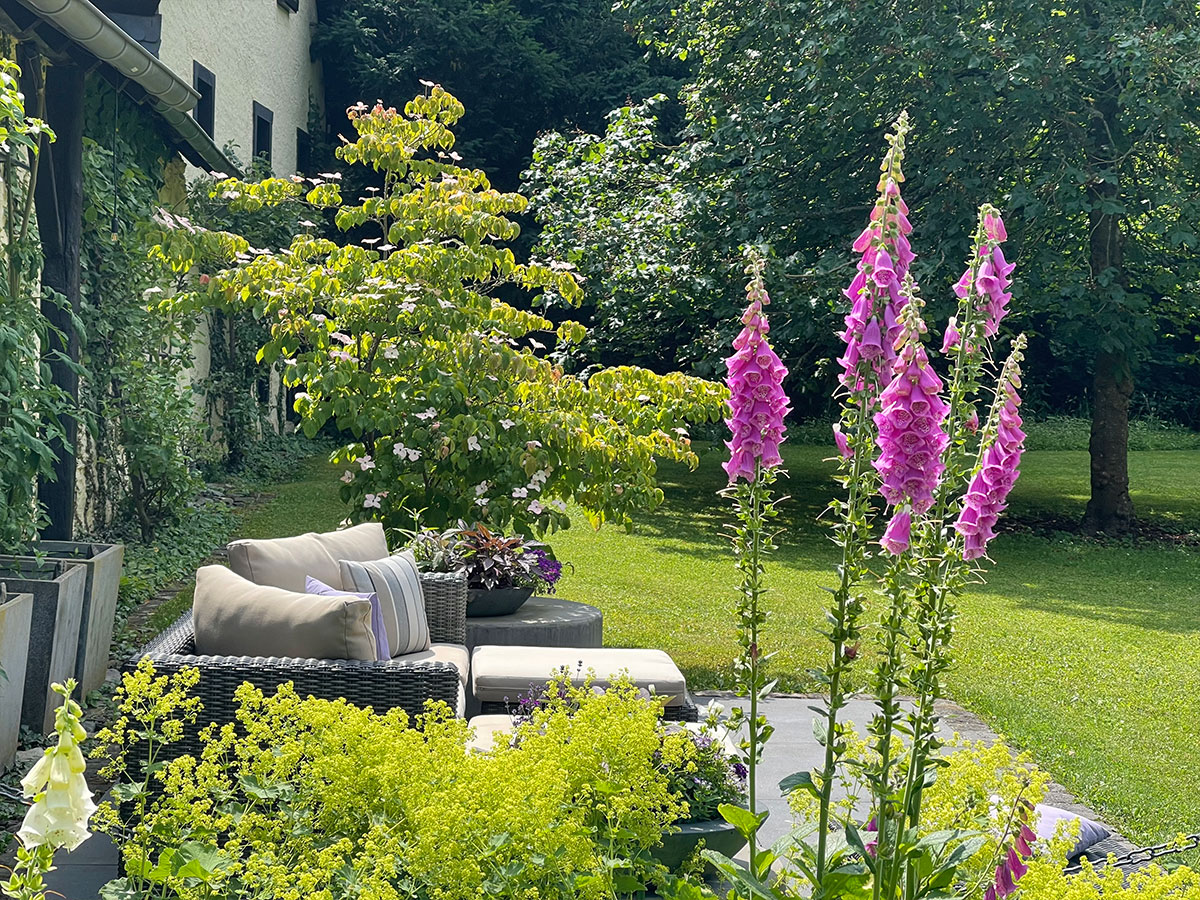
Nothing but nature just beyond the door. Morning brings dew on the grass; midday, the hum of bees; evening, the last light settling over the treetops.
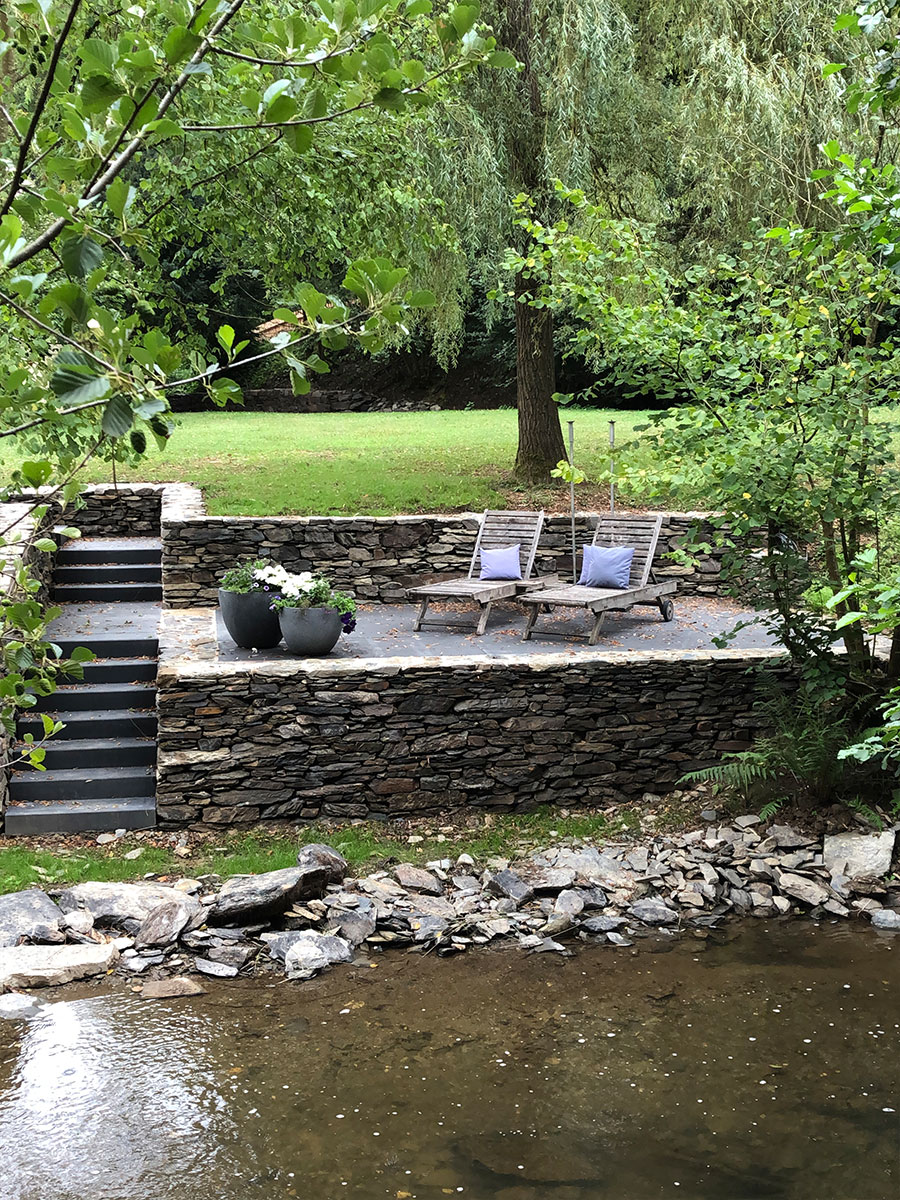
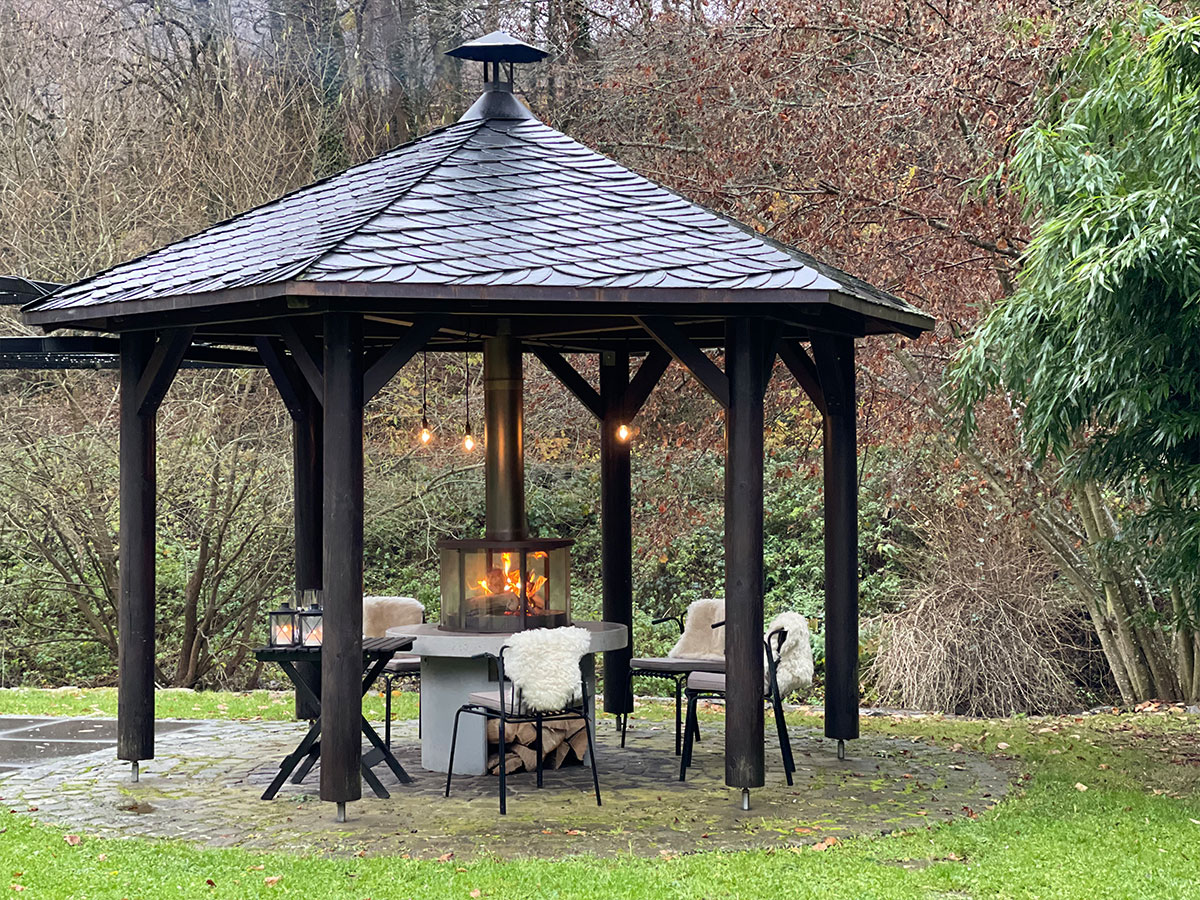
A terrace by the Elz for resting in the sun, seating beneath old trees. A pavilion with a fire pit, sheepskins draped over the chairs, lanterns that flicker as darkness falls. Hidden corners with views of the water. The Elz curves around the grounds in a wide loop, then flows on — through forest and rock, past Eltz Castle, until it joins the Moselle.
Places to linger, to read, to do nothing at all — to watch time drift by.
Our Animals -
Companions between forest and mill.
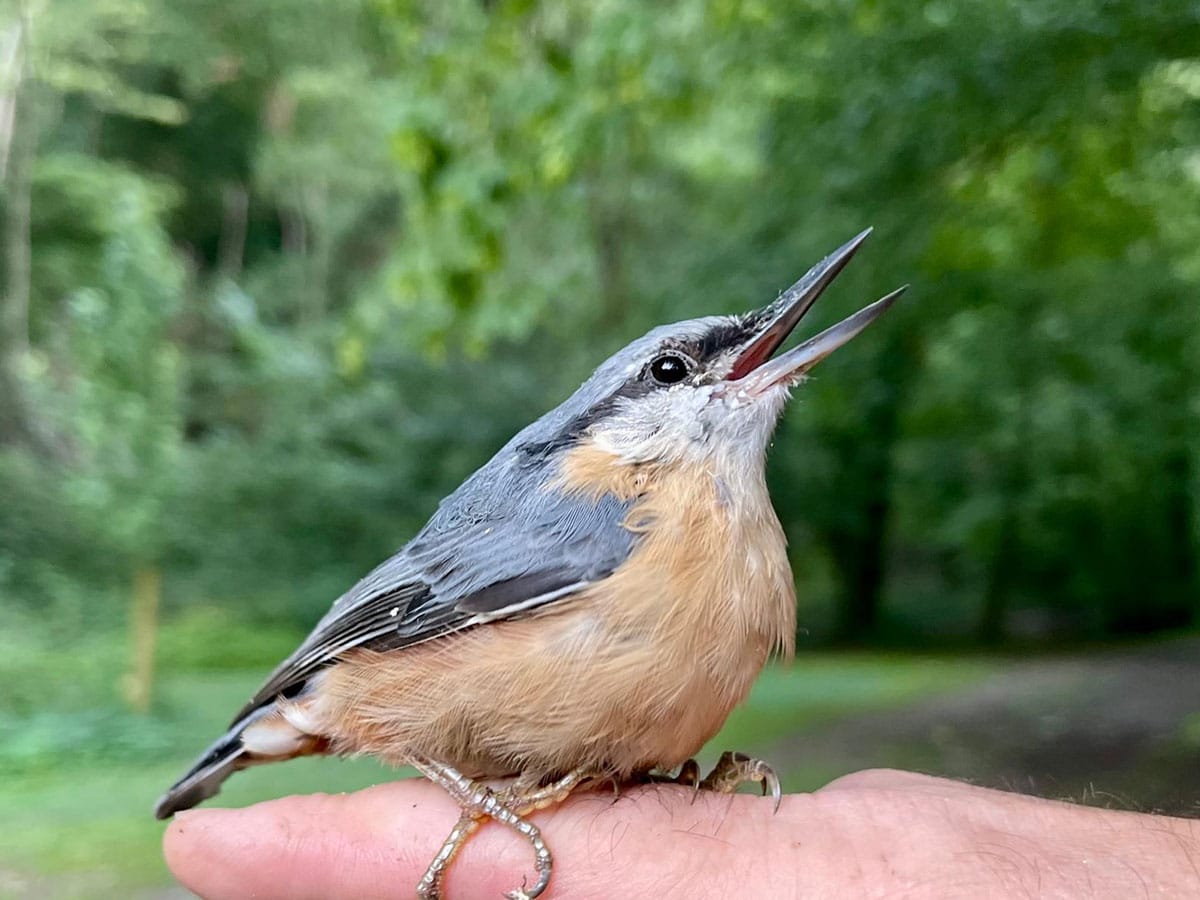
Life around the mill is varied and abundant. Wild creatures that come and go. Animals that have found a home with us. And our own companions, who share this place with us every day.
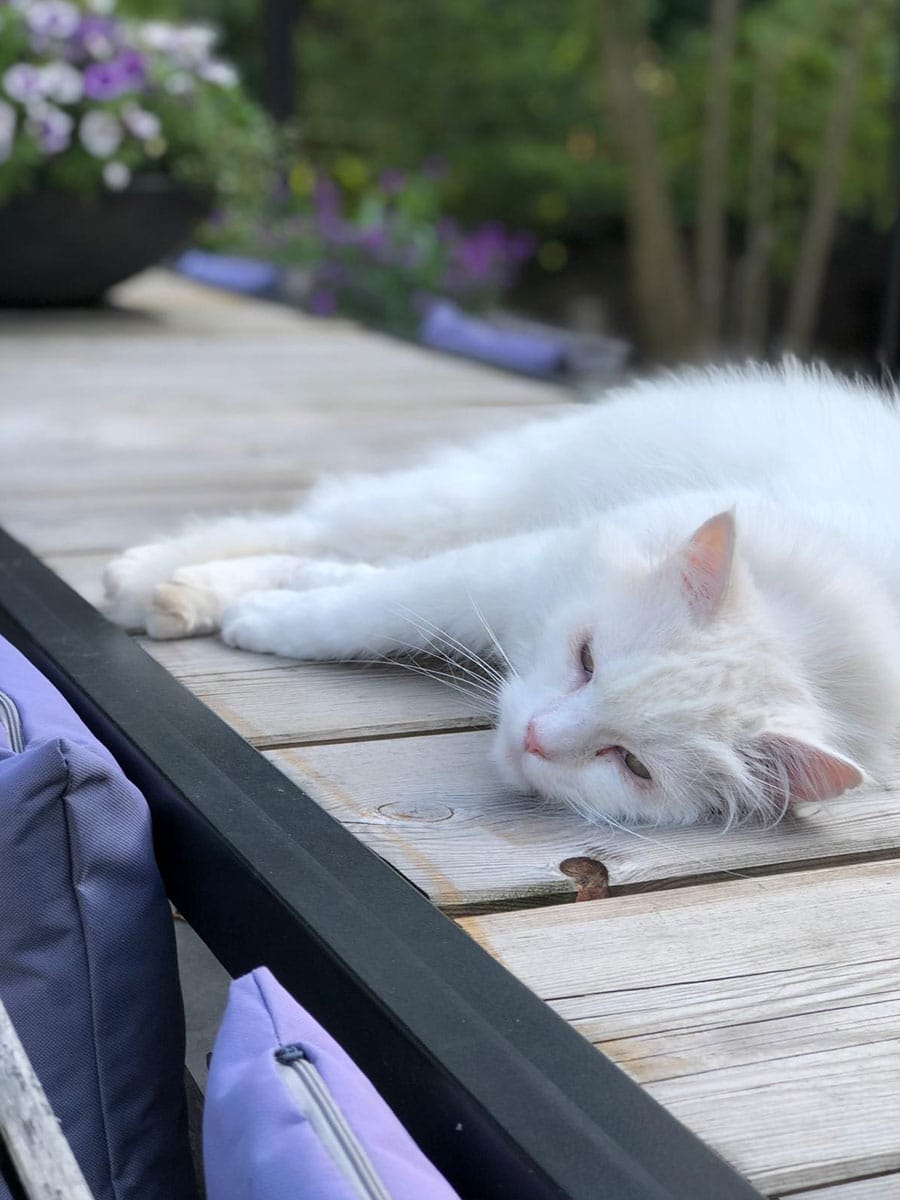
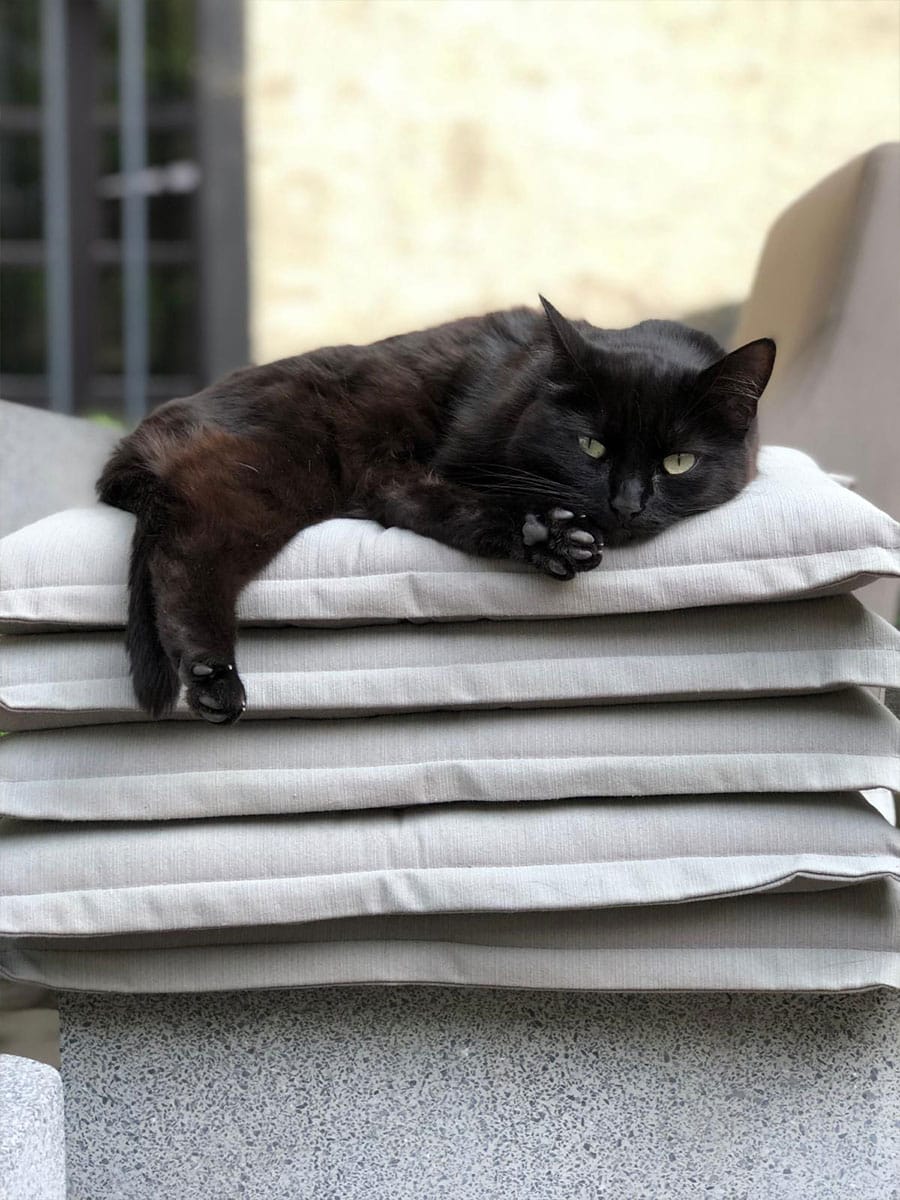
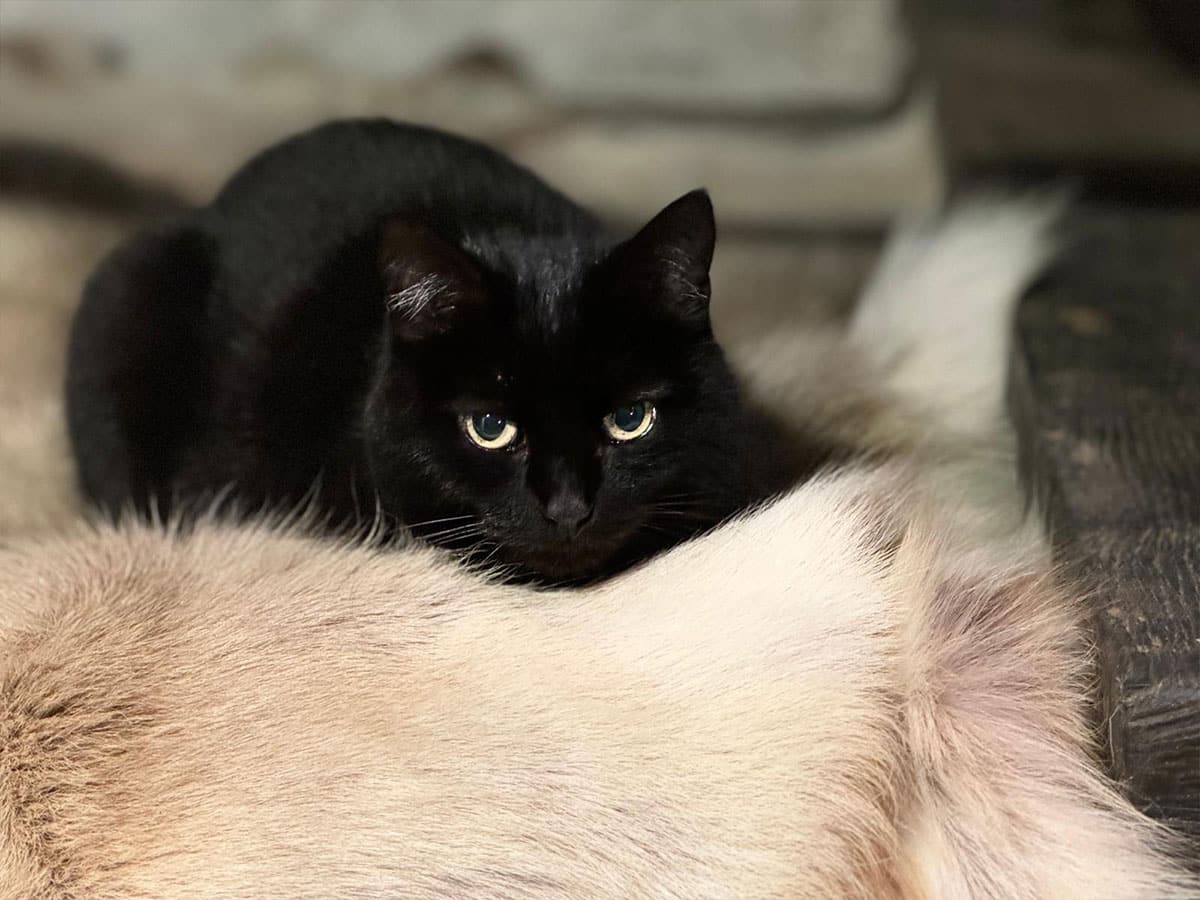
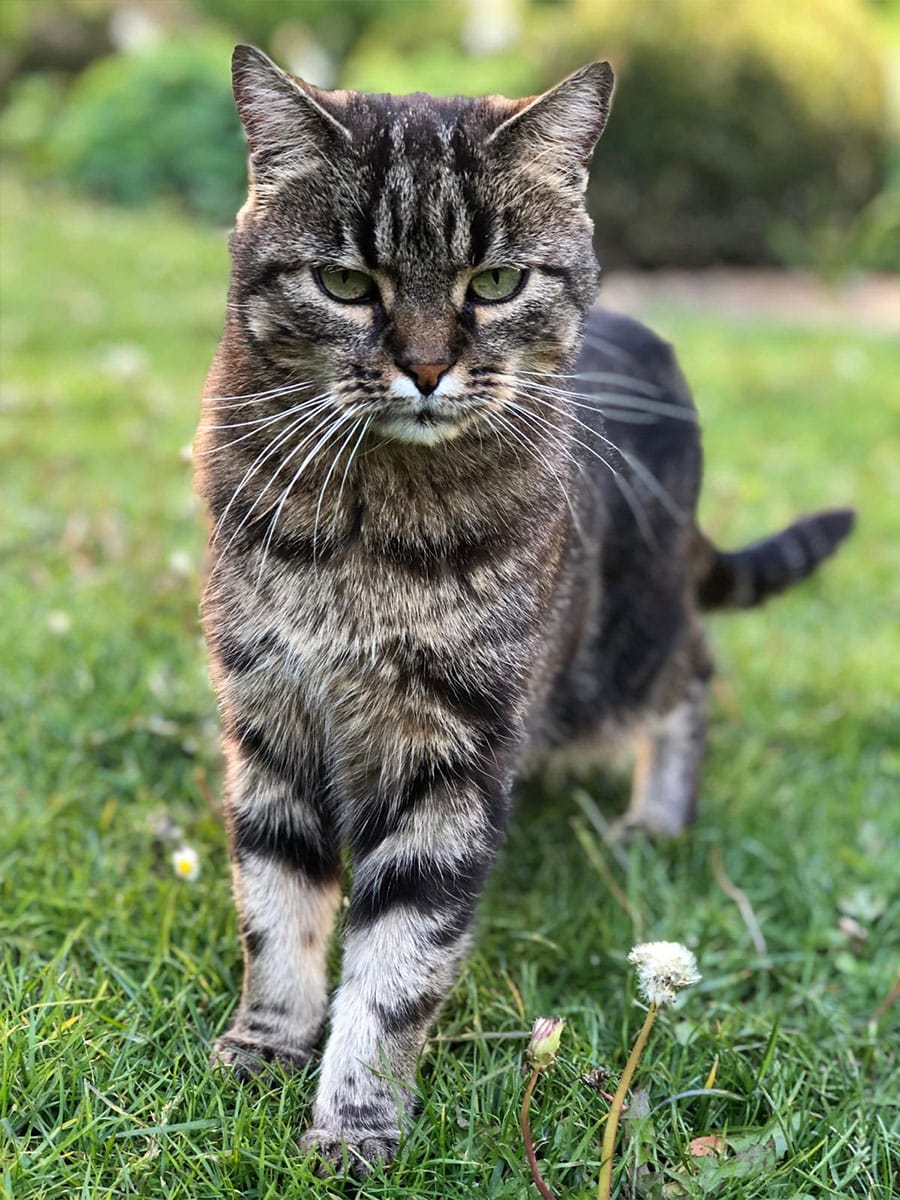
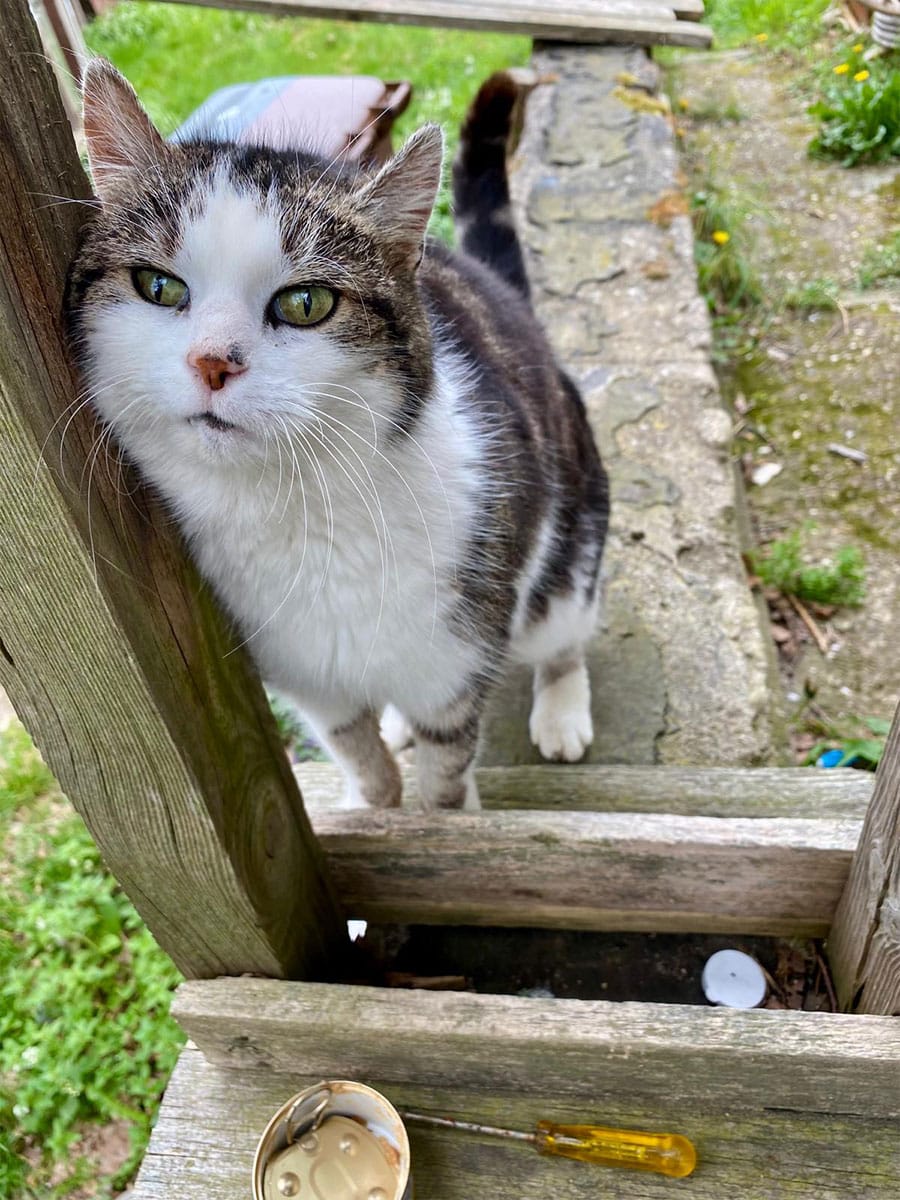
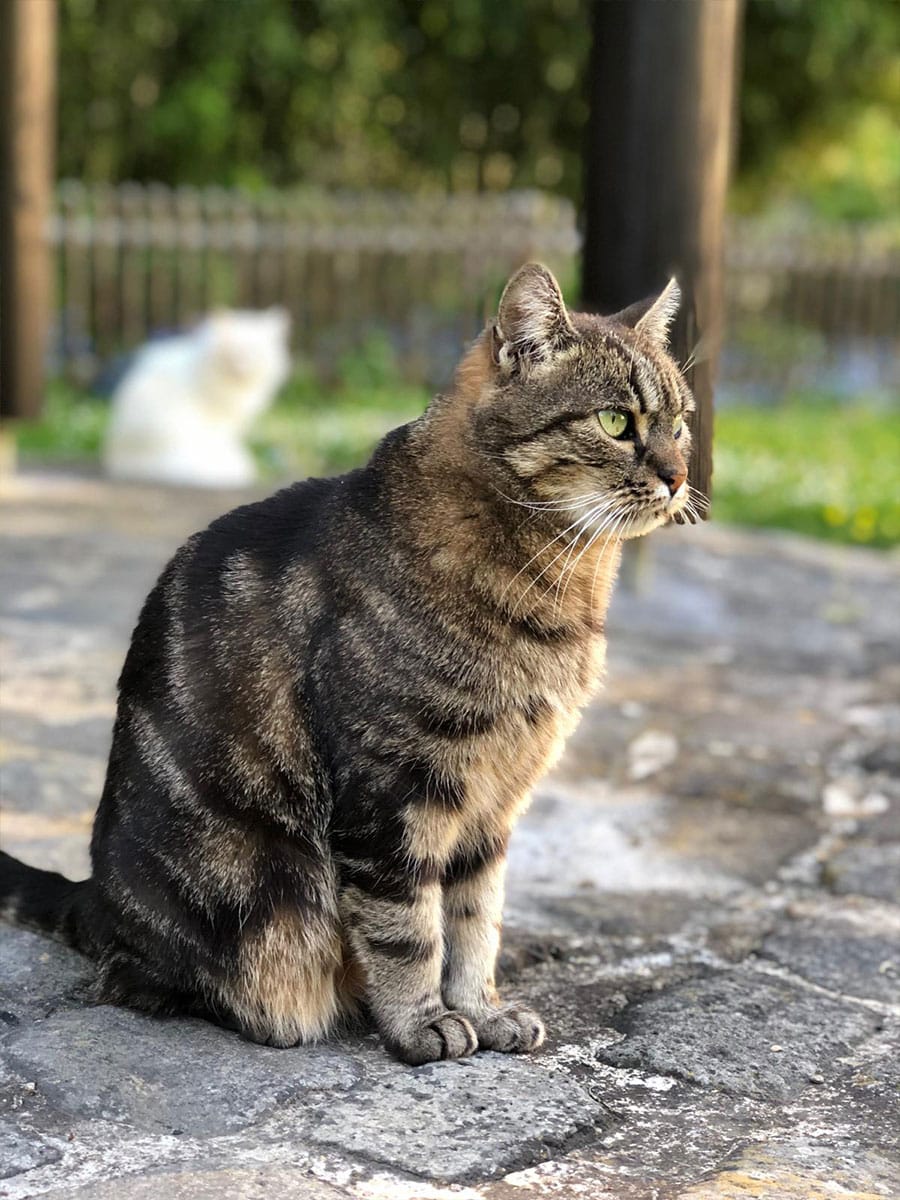
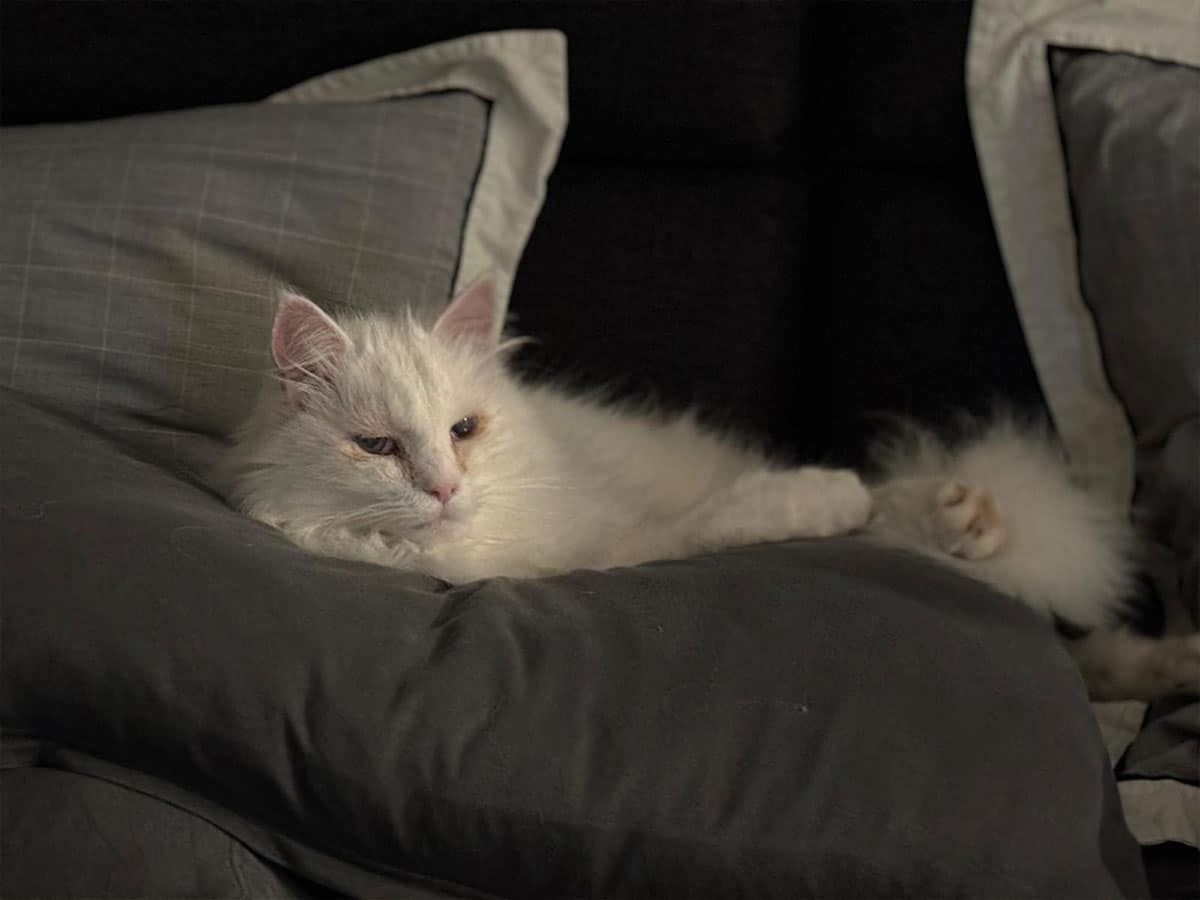
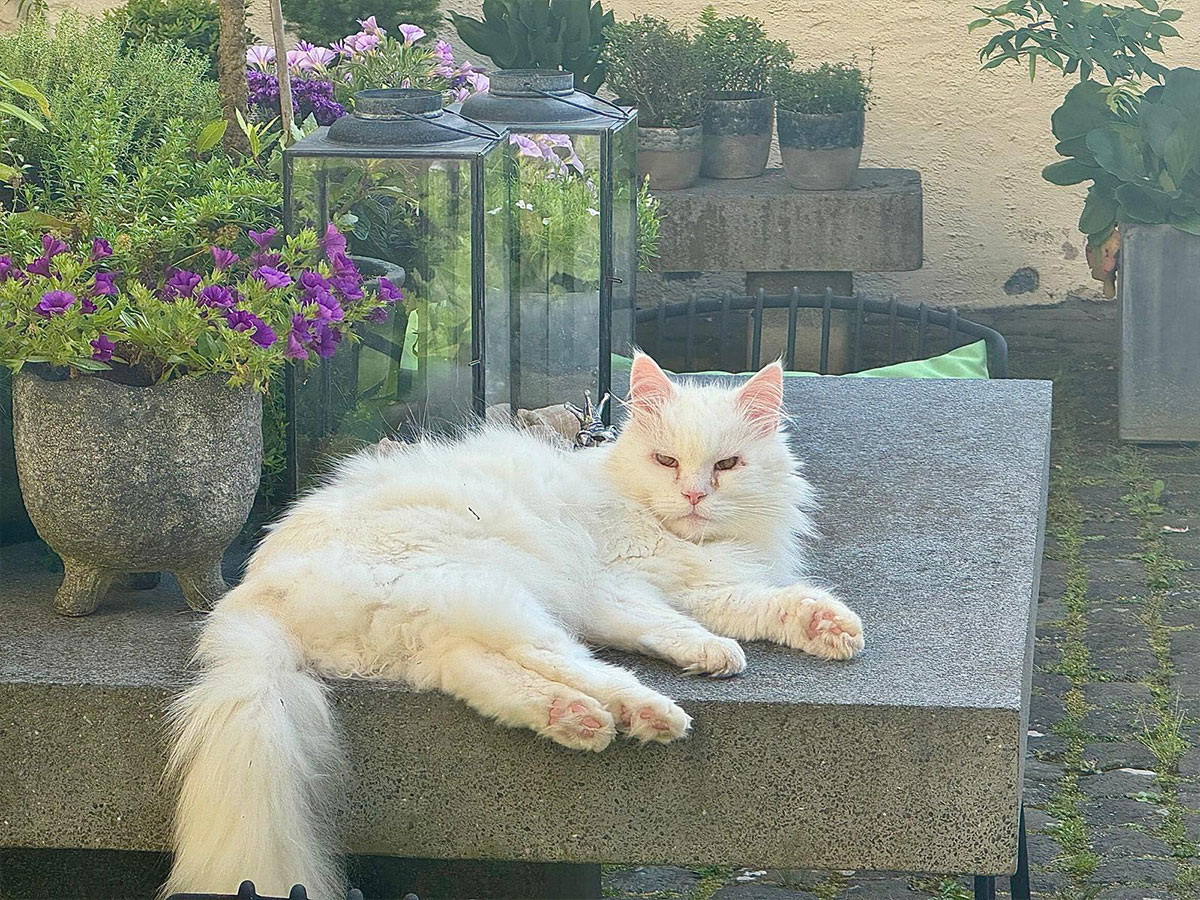
Fritzi and Susi — two cats whose mother is sadly no longer with us. They lie in the sun, wander through the rooms, disappear into the garden. Their calm is contagious.
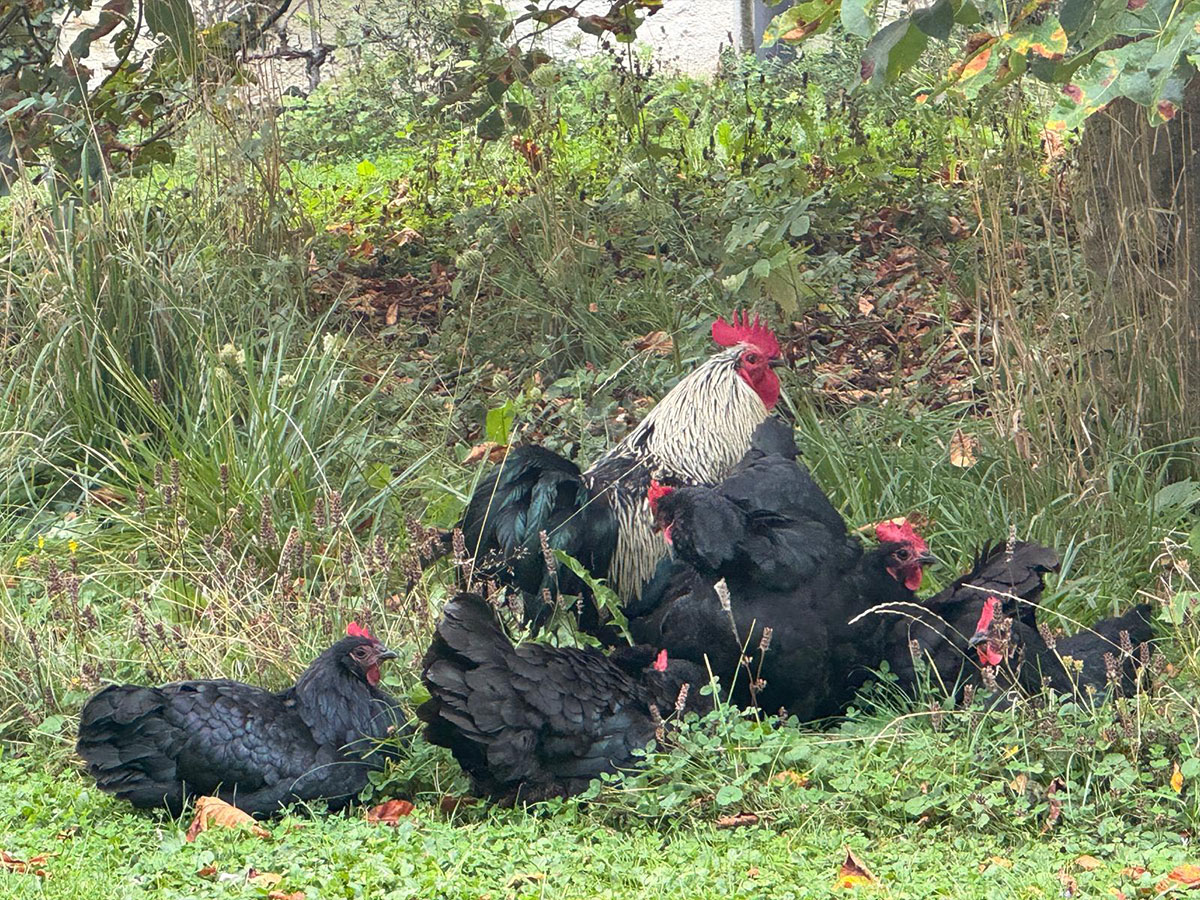
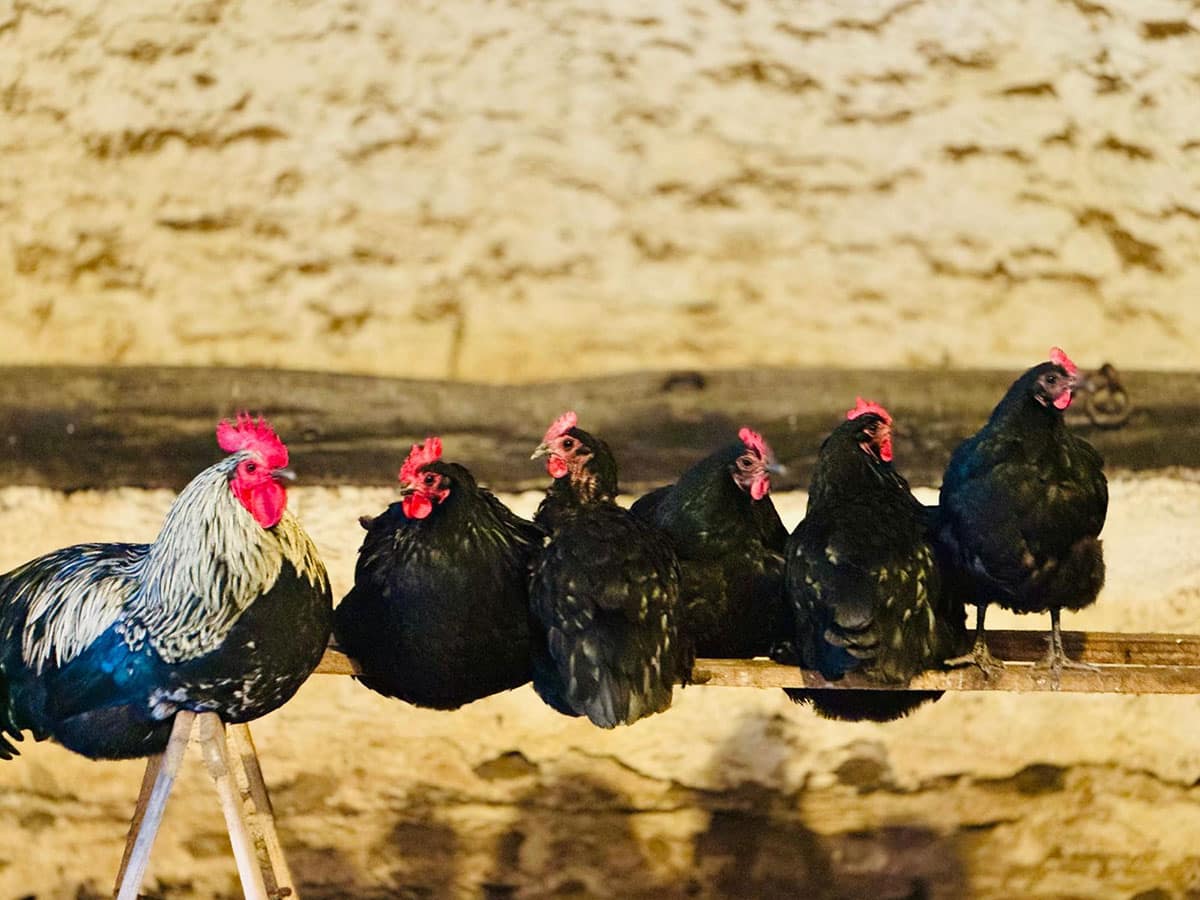
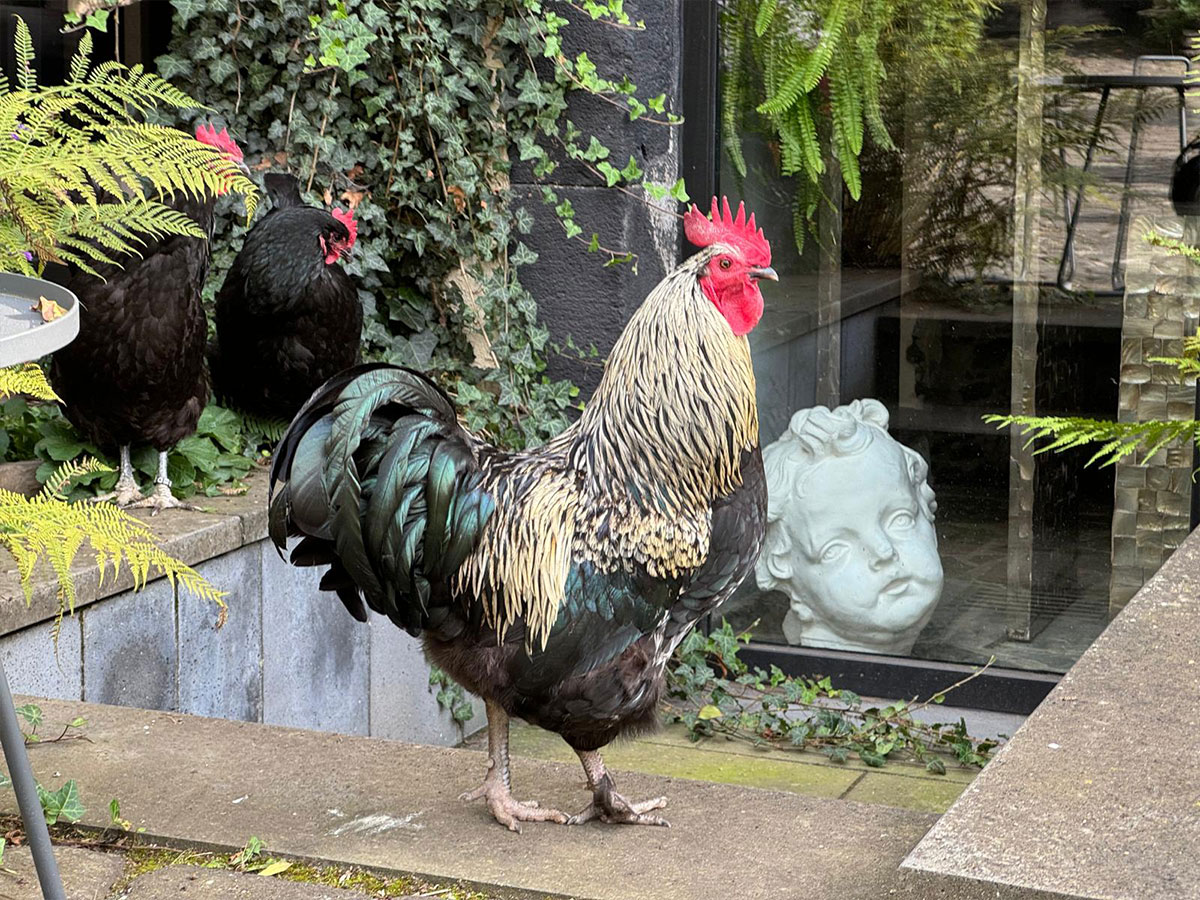
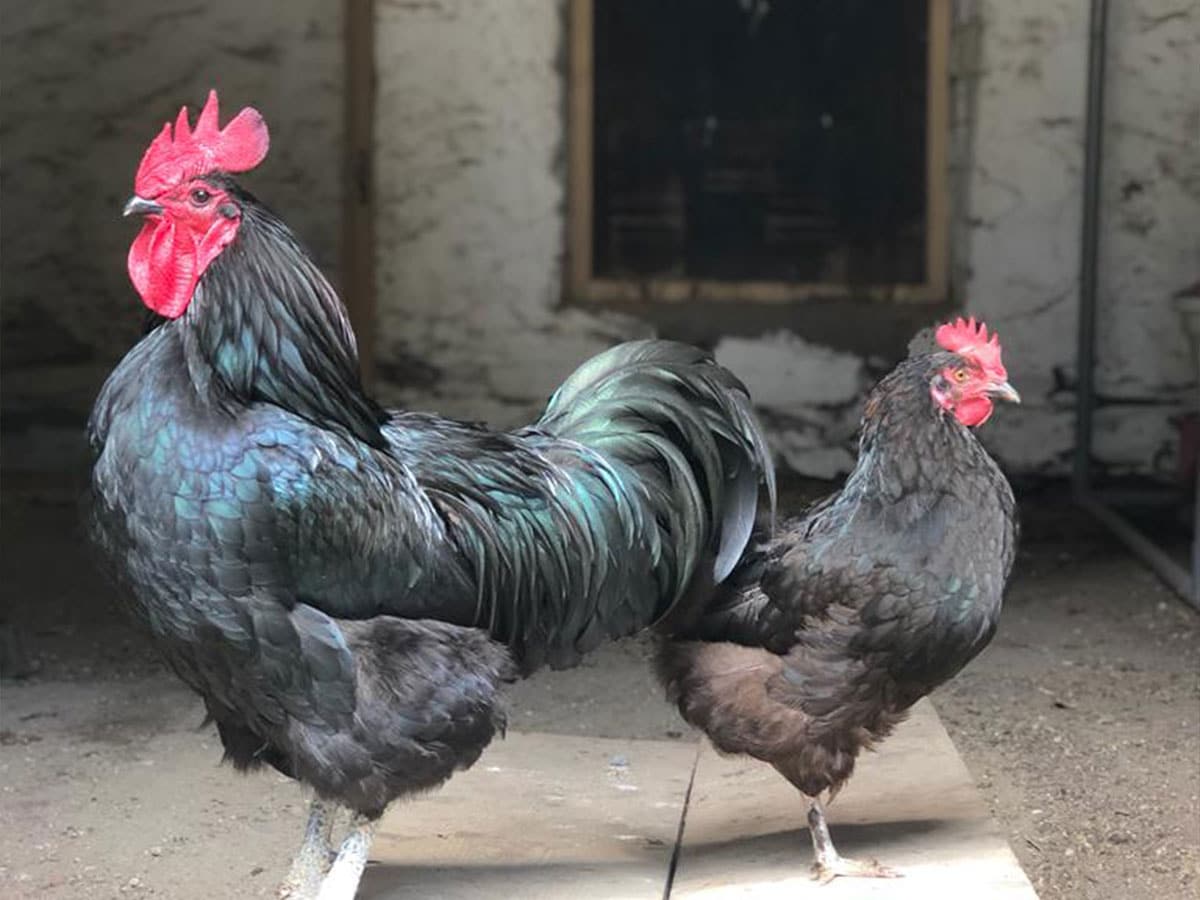
The Chickeria, as we call them. Pierre the rooster, worthy successor to Chicco, presides over his small realm: Otti, Cilli, the two hens from Frankfurt, and Rita, the newest arrival. Rita came so the older hens could enjoy their well-earned retirement.
Fresh eggs for breakfast – unless, for once, the ladies had better things to do.
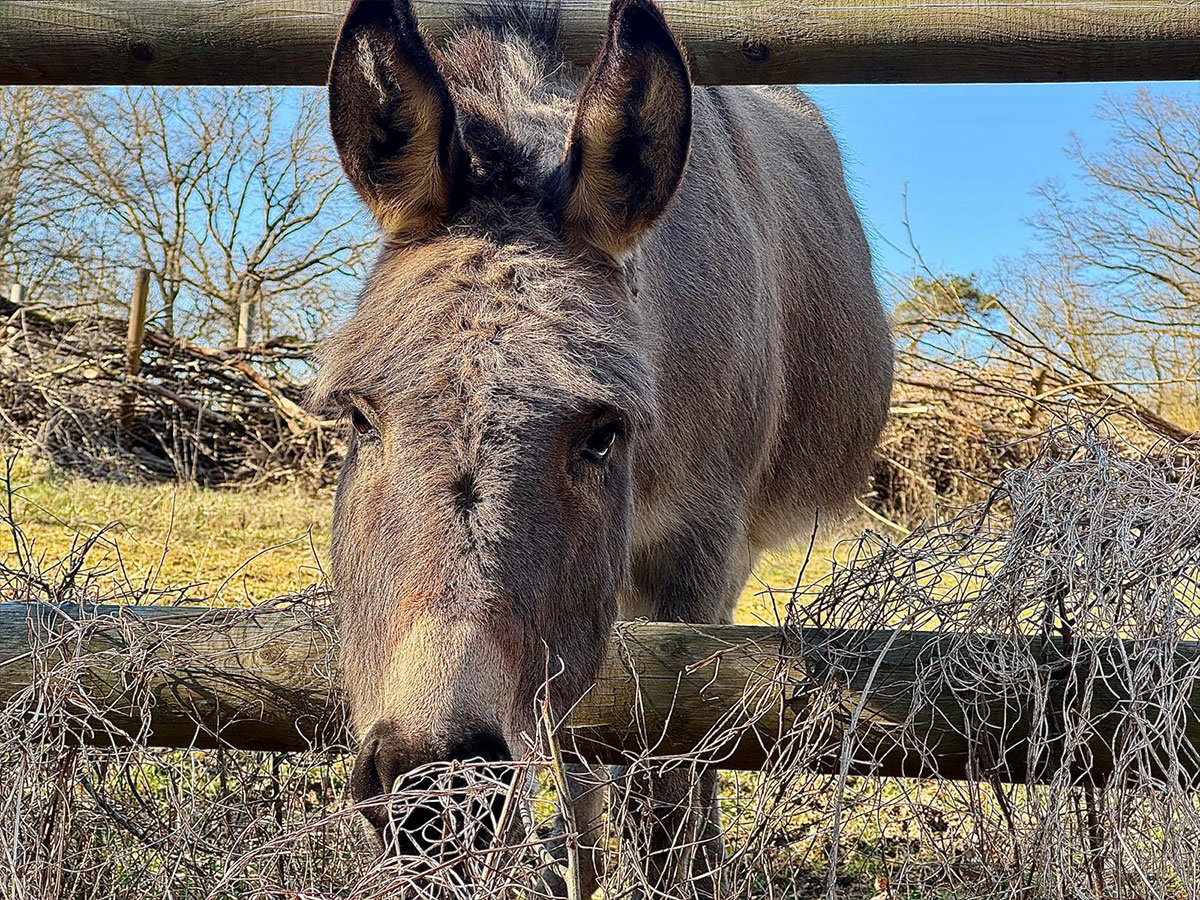
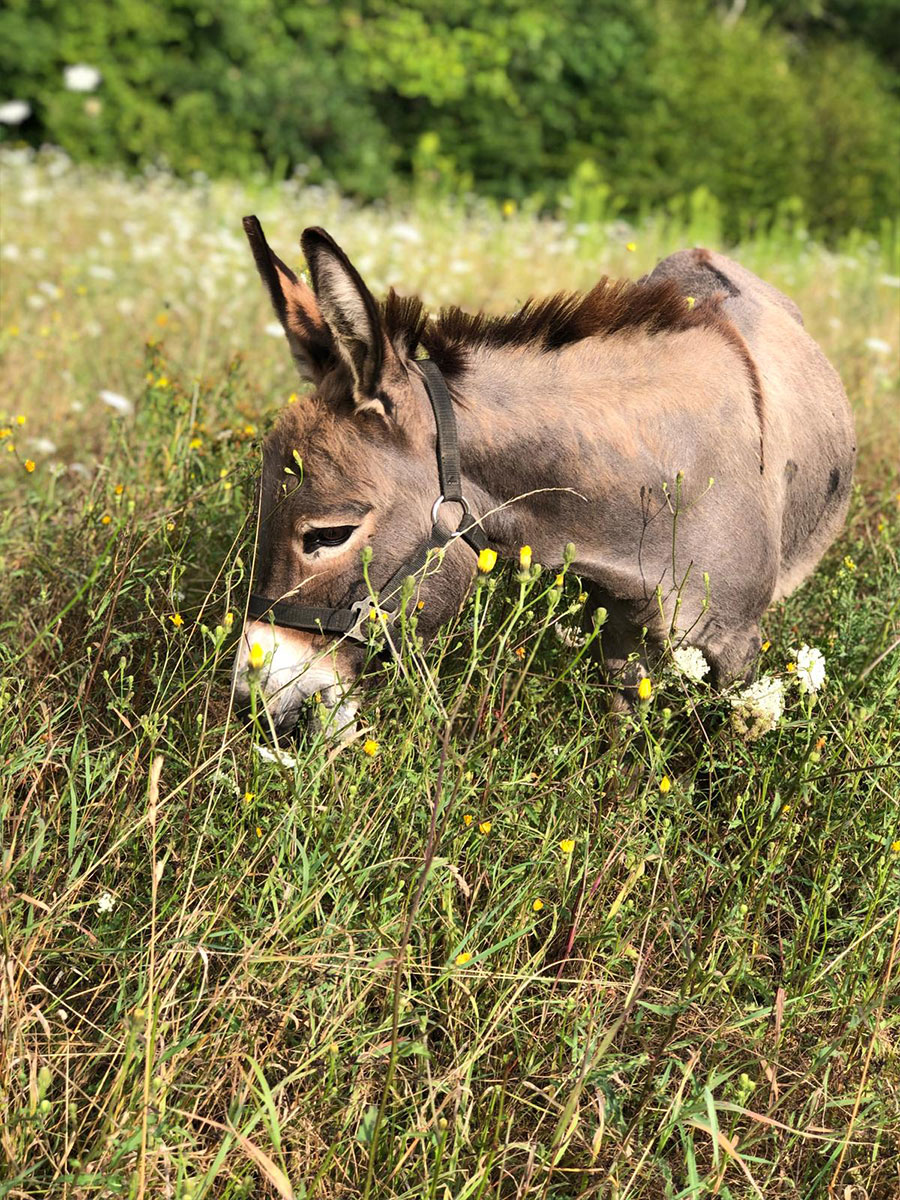
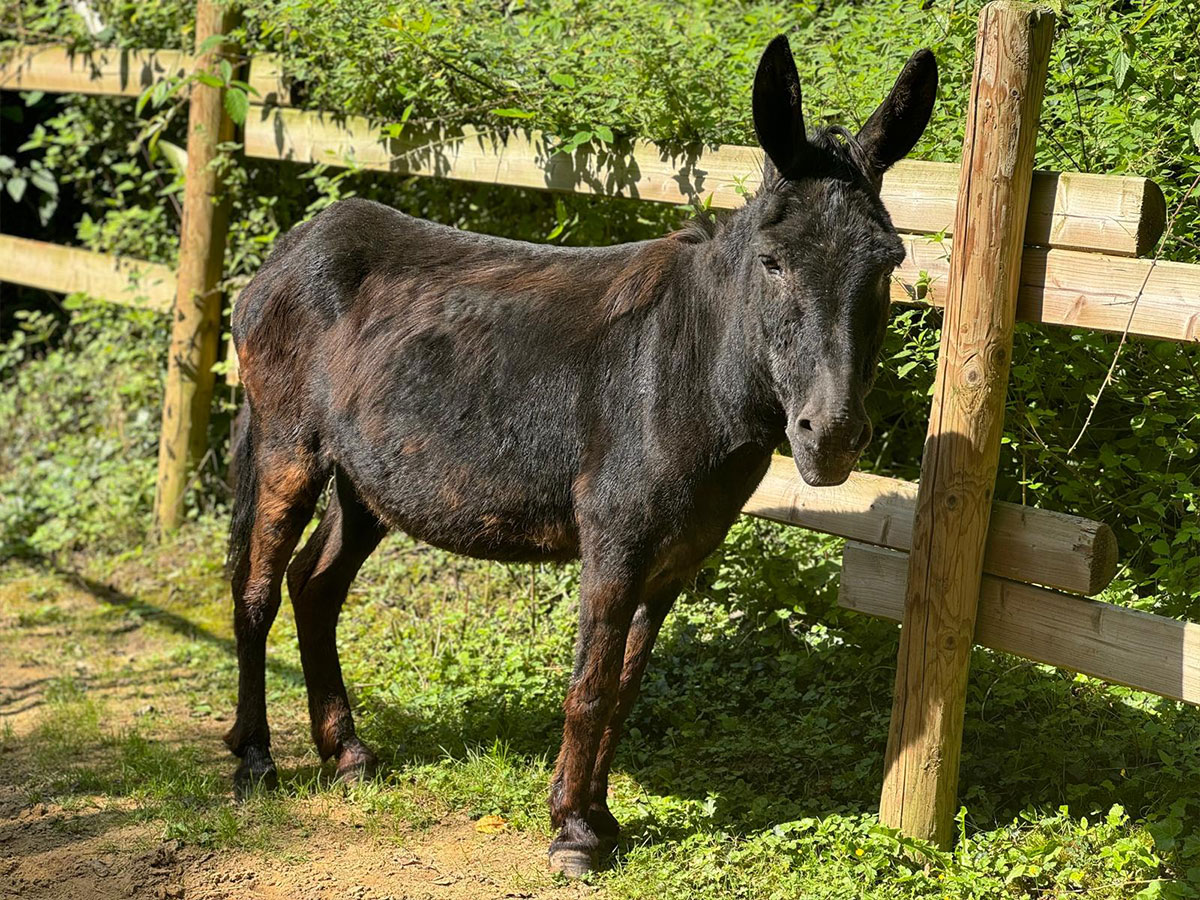
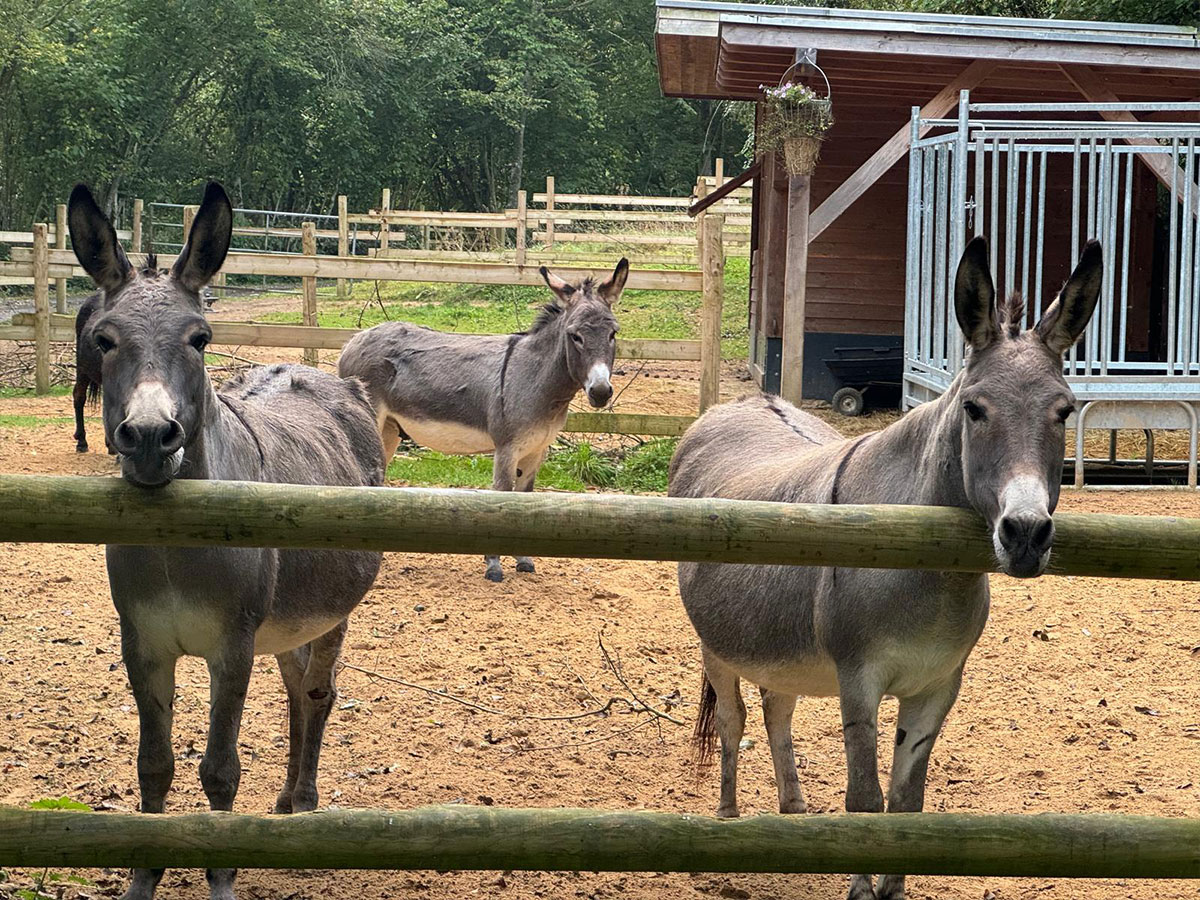
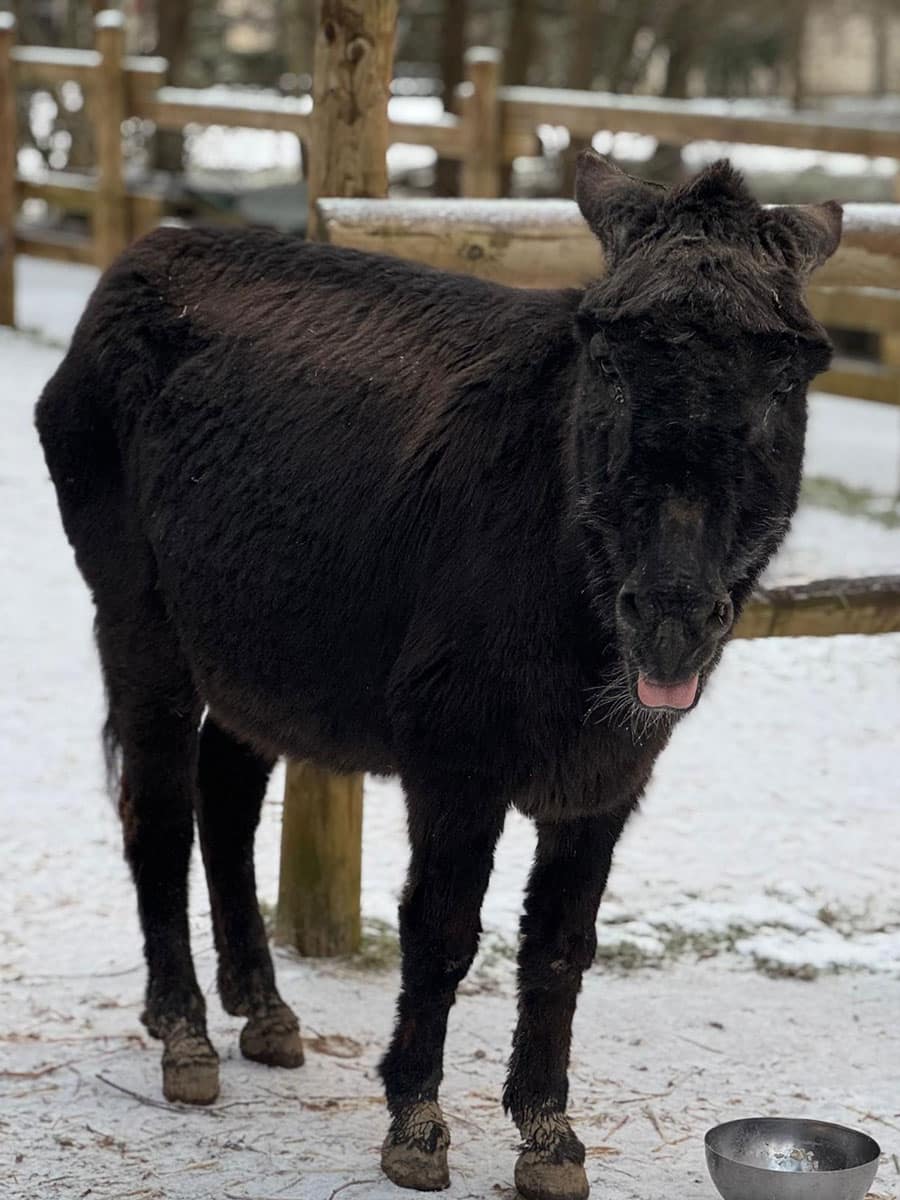
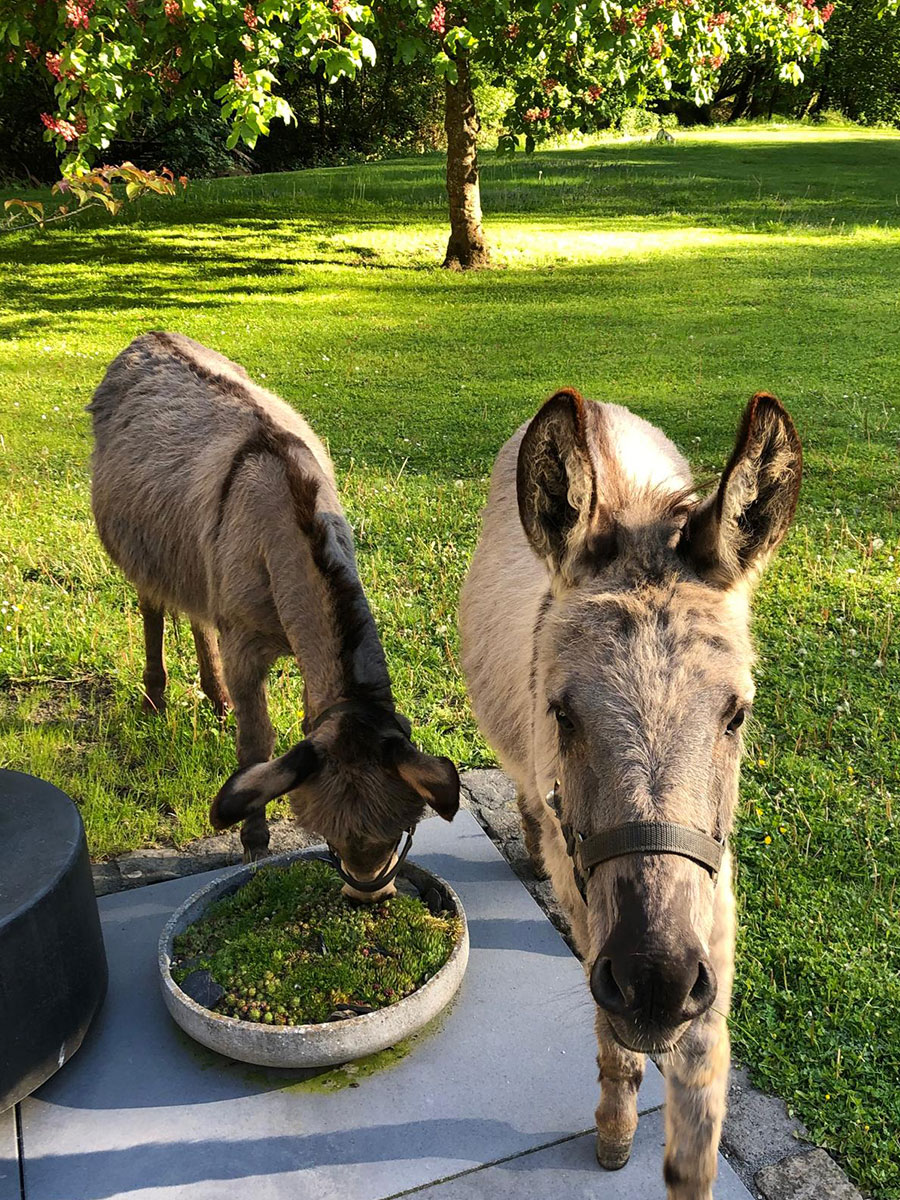
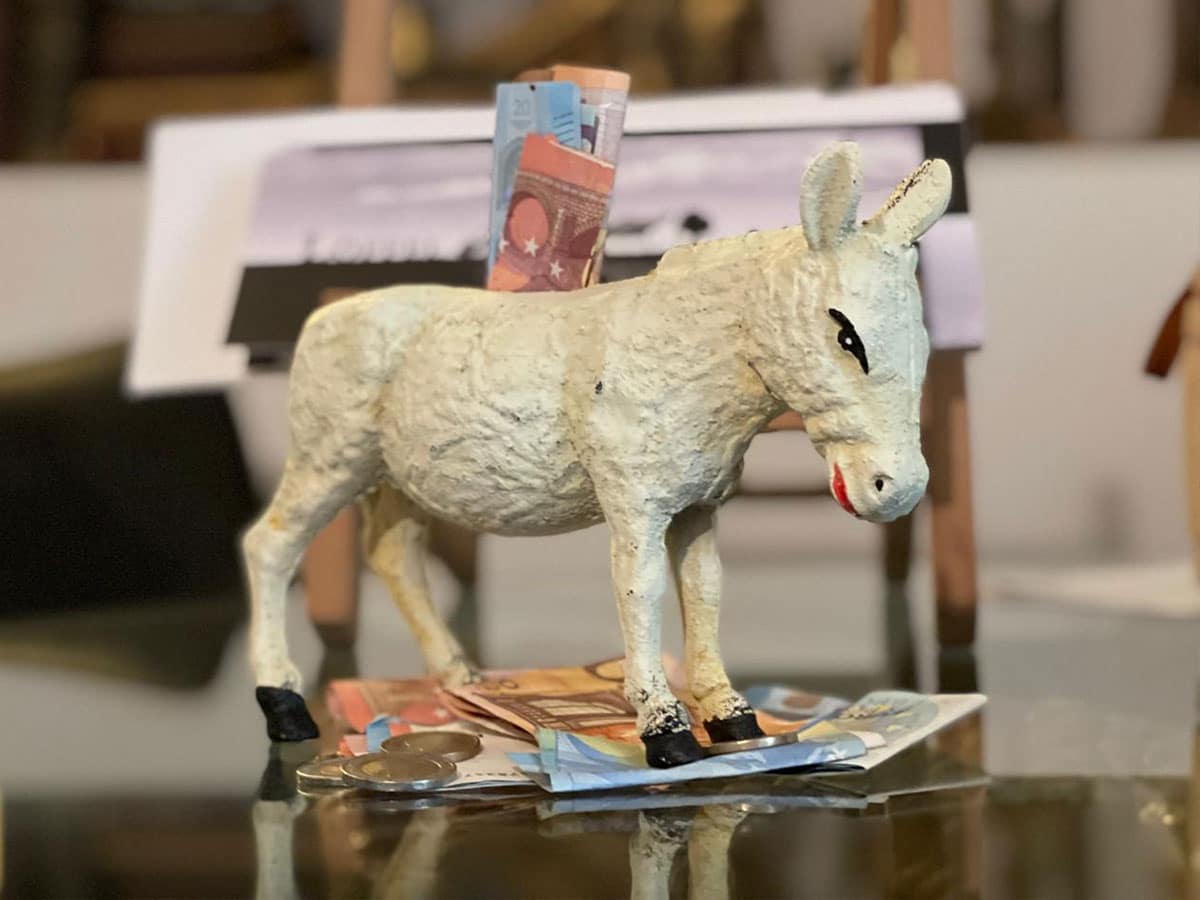
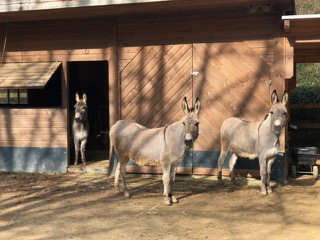
Lucie, Alma and Nils – our three donkeys. They look after the meadows around the mill. Unhurried, thorough, in their own way. Fresh hay and grooming every day. Unhurried, like everything here.
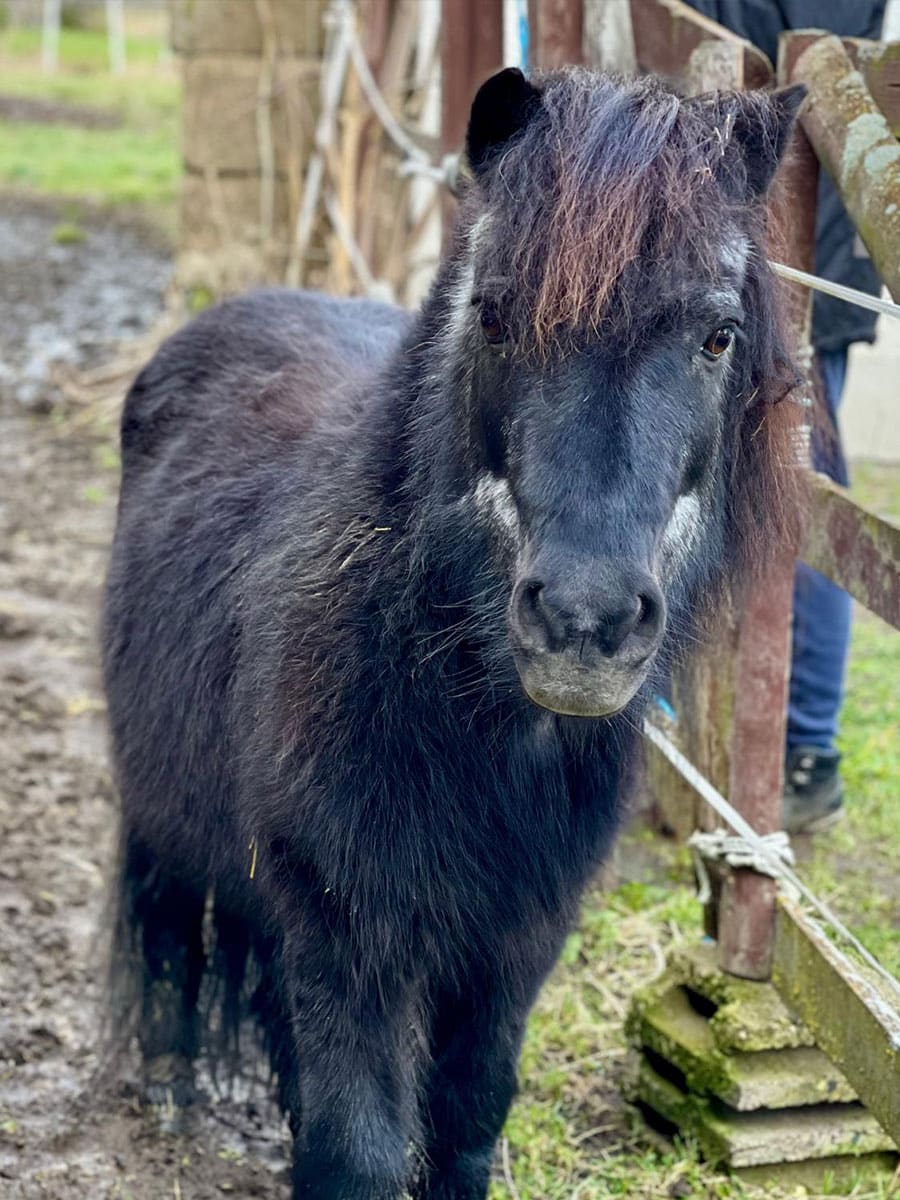
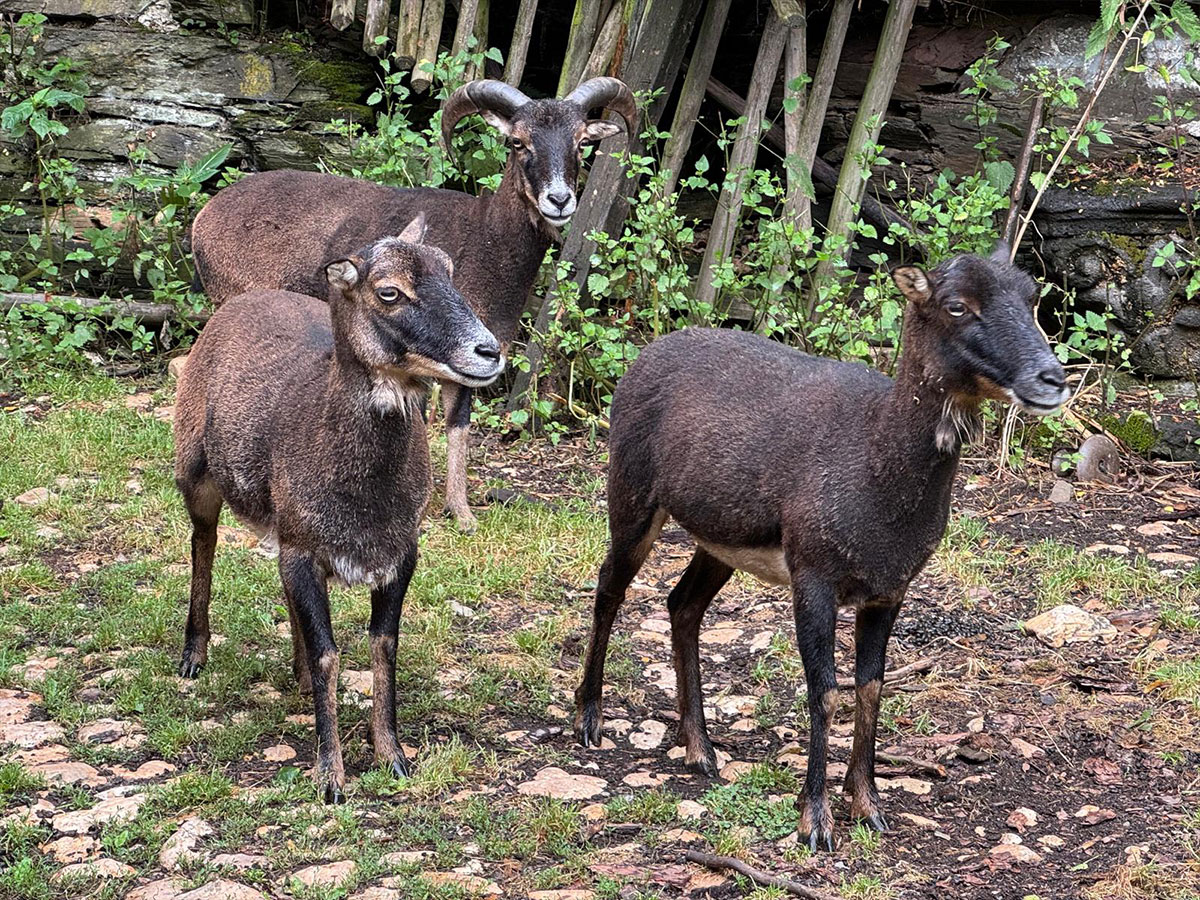
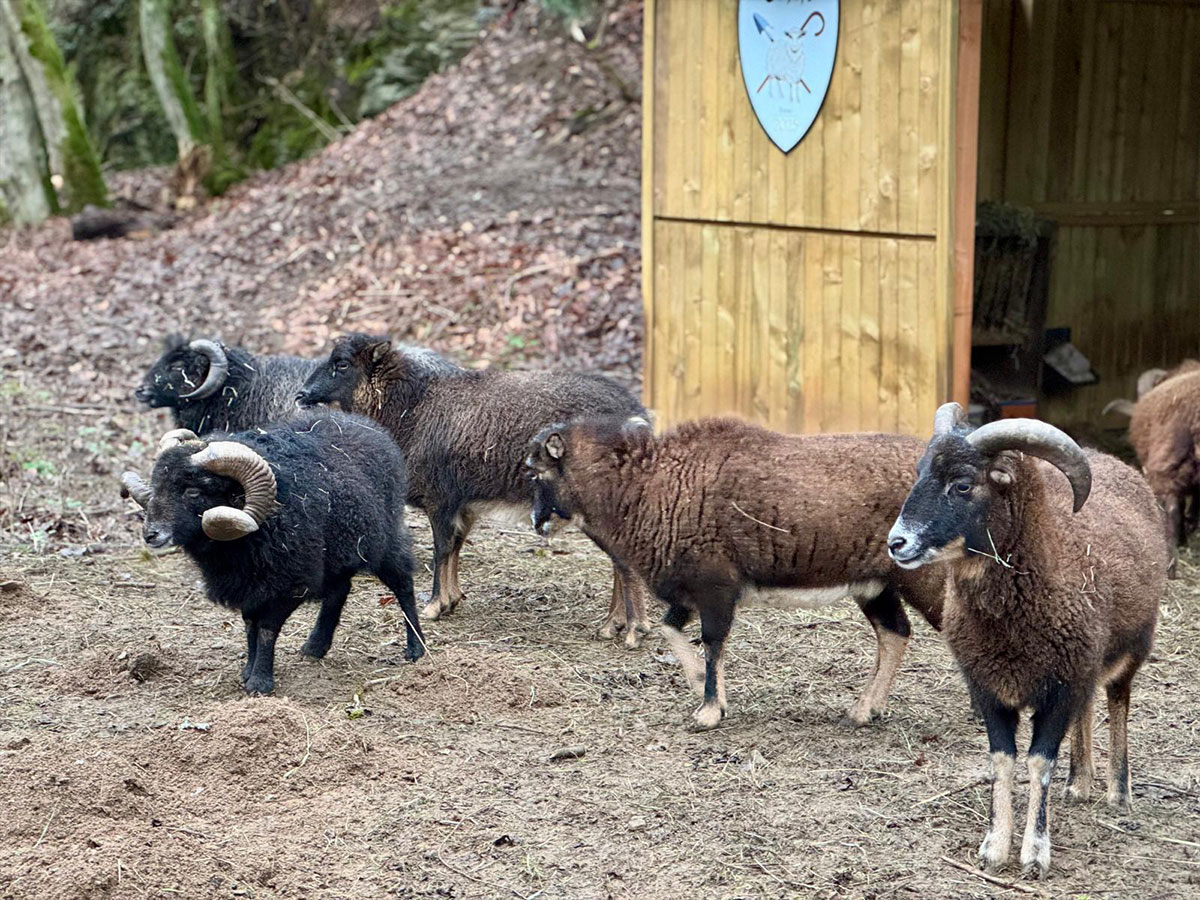
In the forest garden, we care for our flock of nine Ouessant sheep, a small breed originally from Brittany — which is why they all have French names. Louis the lead ram and his companions: Babette, Chantal, Mini, Diane, Léonard, Luna, Hubert, and Caramel.
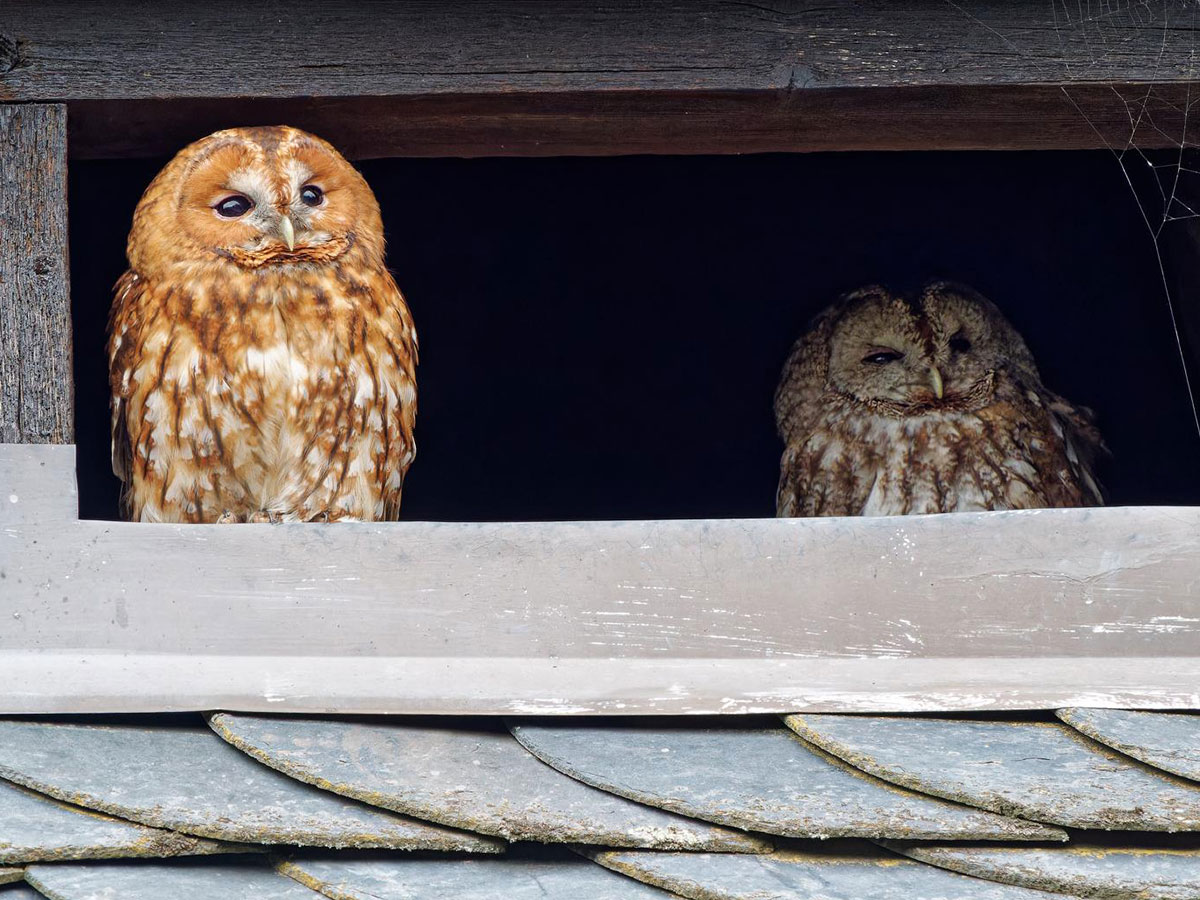
Two owls have made their home in the barn. They nest here; they belong here. The wild and the mill — long since one and the same.
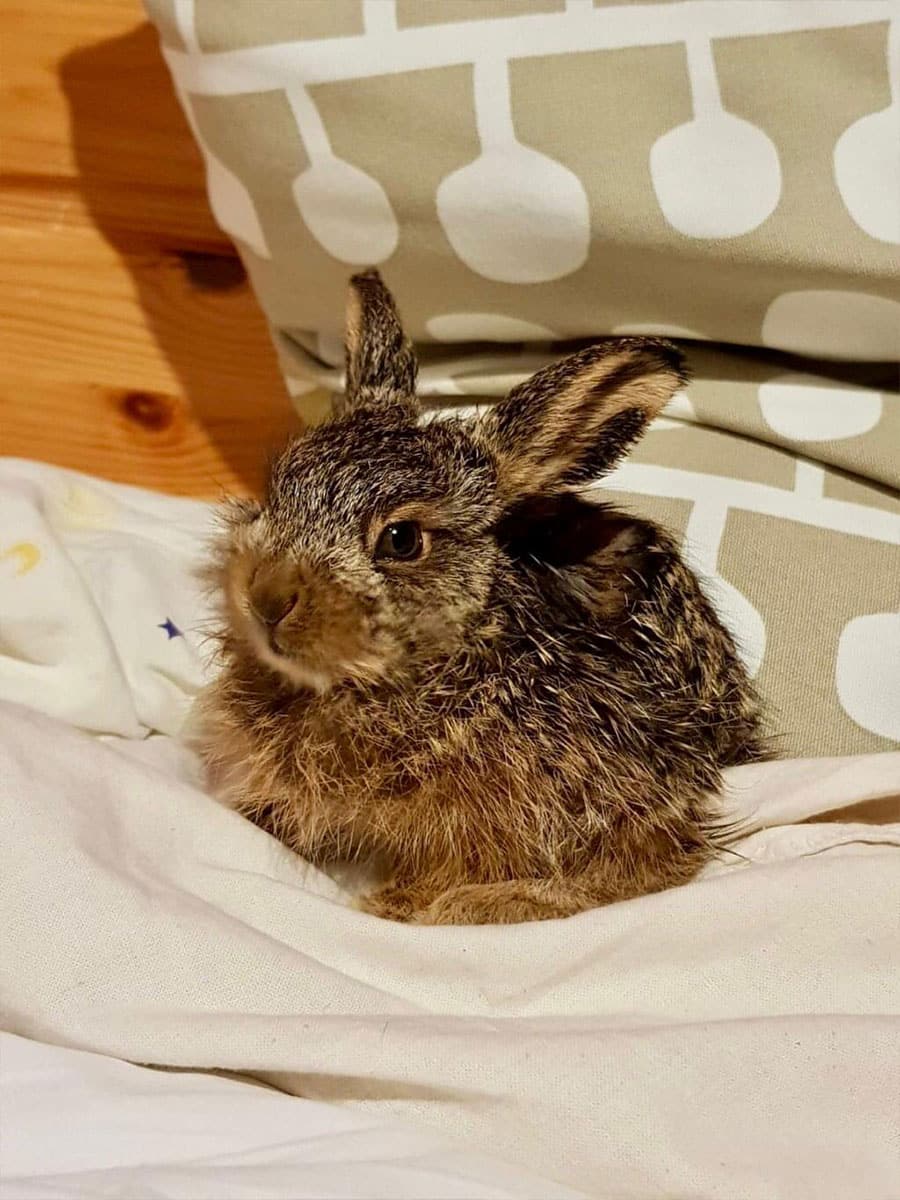
Animal welfare is close to our hearts. We care for injured wild animals and give them shelter until they are back on their feet. Every tip we receive goes in full to Noteselhilfe e.V. – on behalf of our guests. For a dignified life, free from pain.



And Beyond
What else is part of life here.
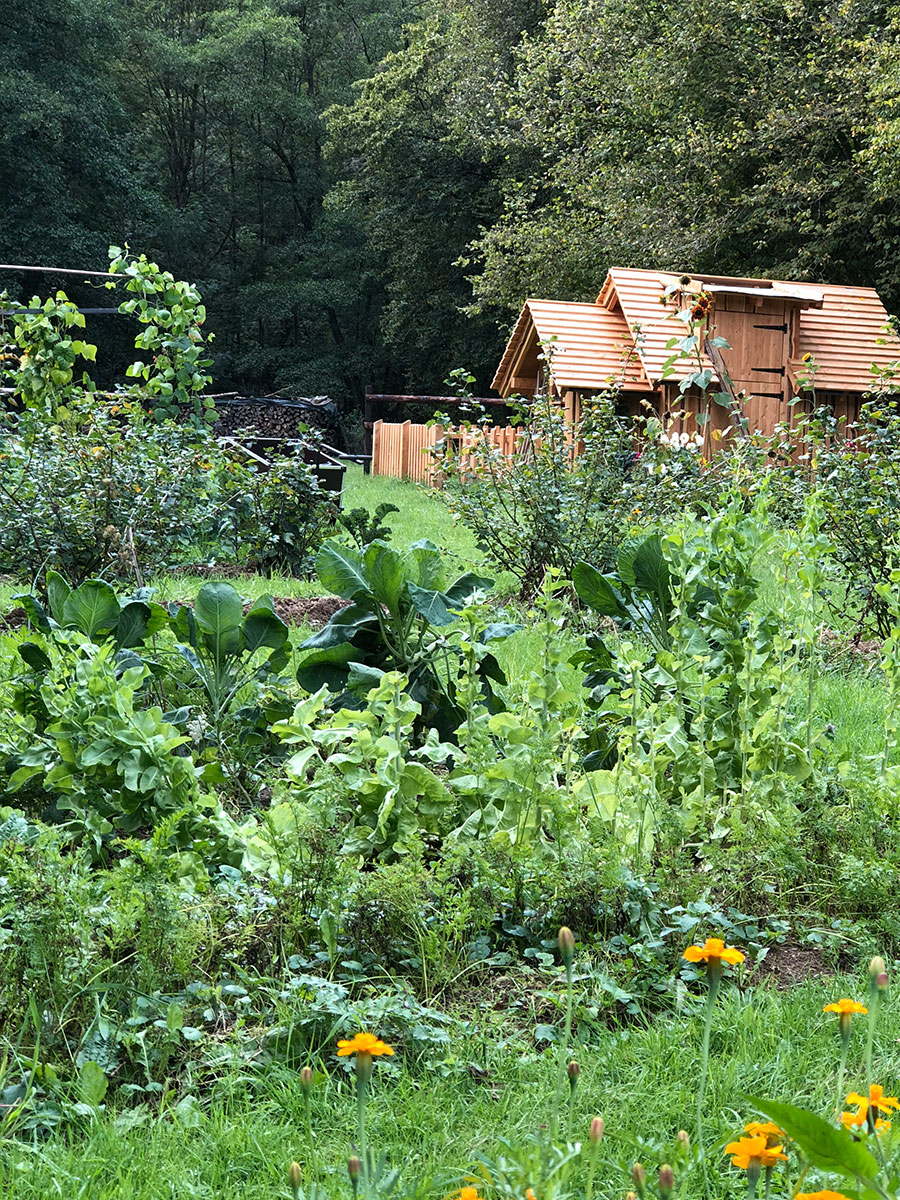
Some places reveal themselves only at second glance. Roland's vegetable beds, where what grows there appears on the table that evening. A quiet spot among the trees, where time seems to pause.
The Tree of Life
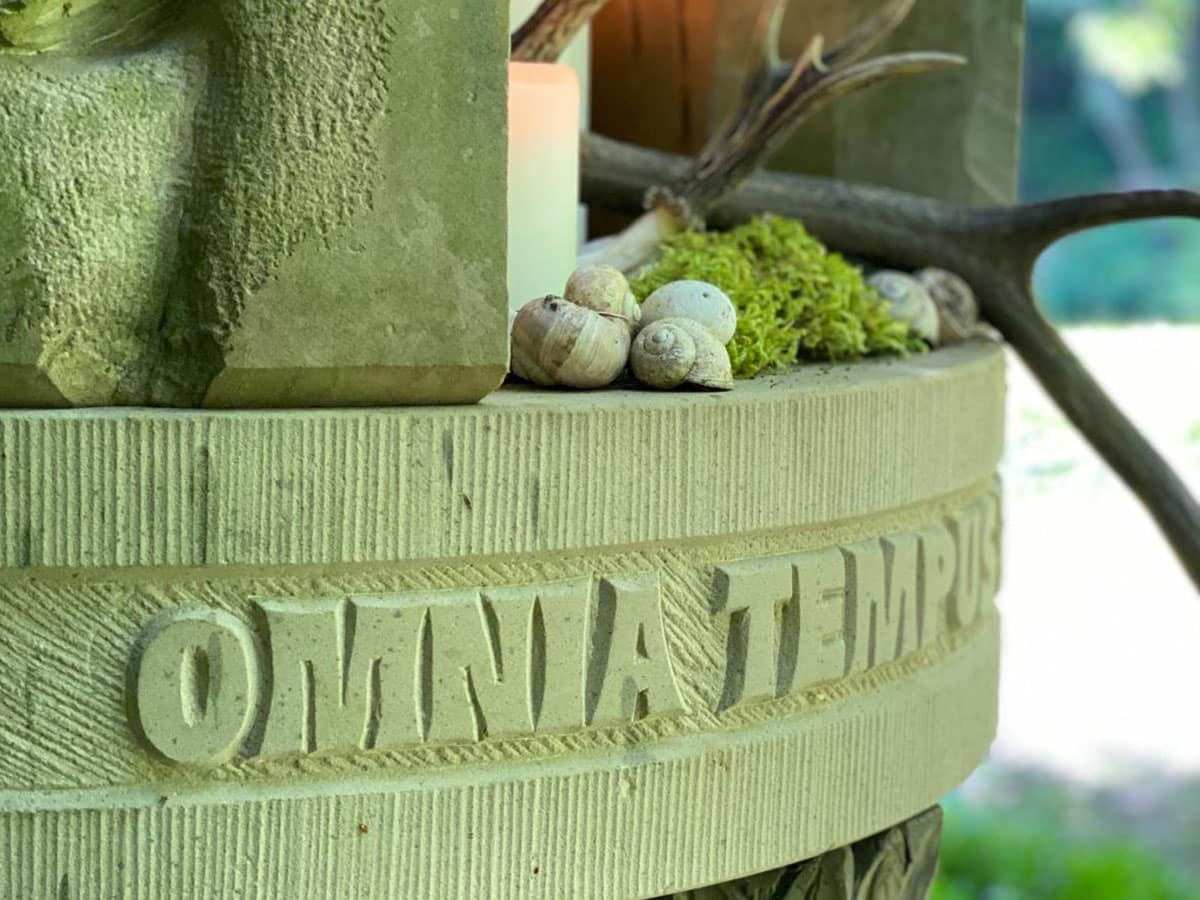
Omnia tempus habet. Everything has its time.
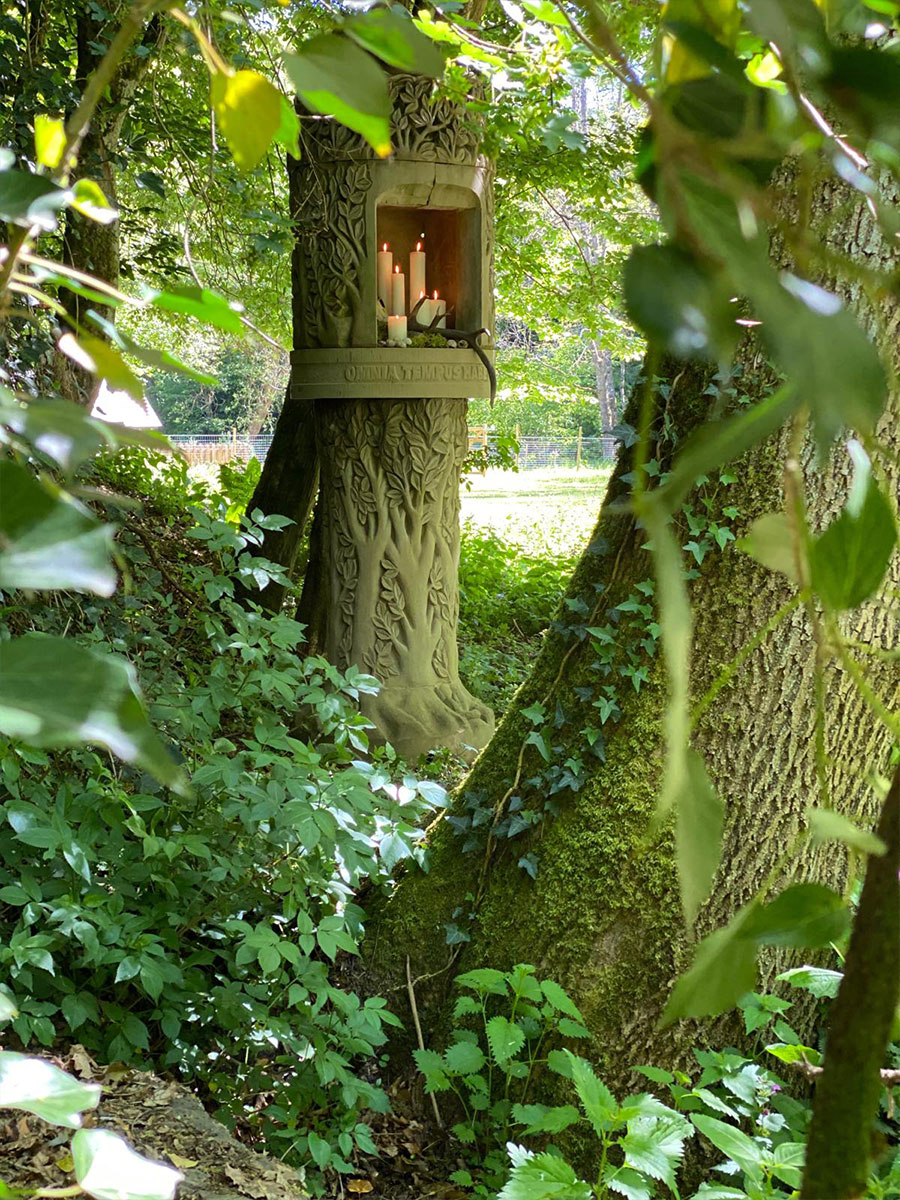
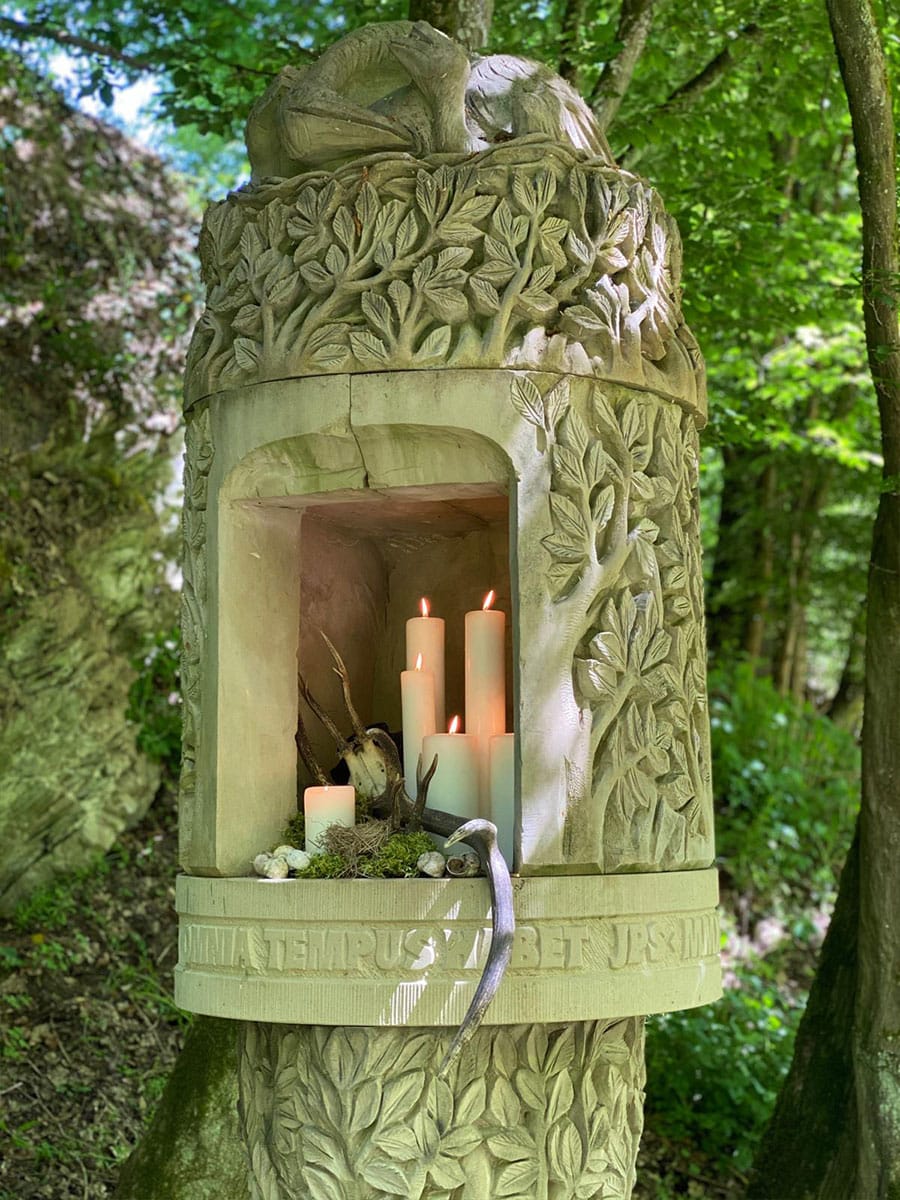
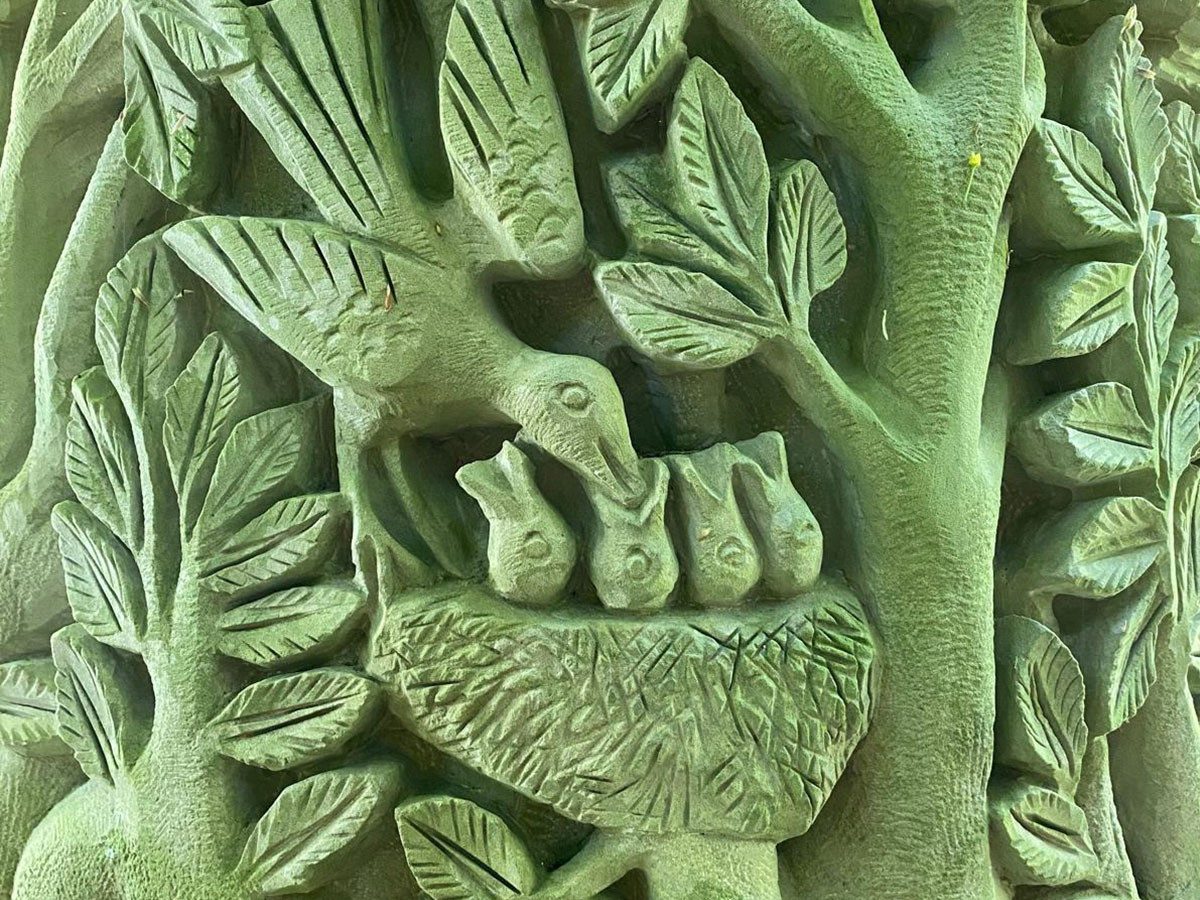
Among the old trees, set slightly apart in our forest garden, stands a stone stele. A tree of life, carved with creatures of earth and air. Crowned by a pelican's nest — a timeless symbol of care and compassion.
Candles burn in the niche. Moss, snail shells, a piece of antler — found objects from the valley, changing with the seasons.
It is a place of stillness. A place of remembrance for the animals that have lived here. And perhaps, one day, for us as well.
We had it built in 2018. Not because something had ended — but because some things need a place to endure.
The Kitchen Garden
What grows here finds its way onto the table.
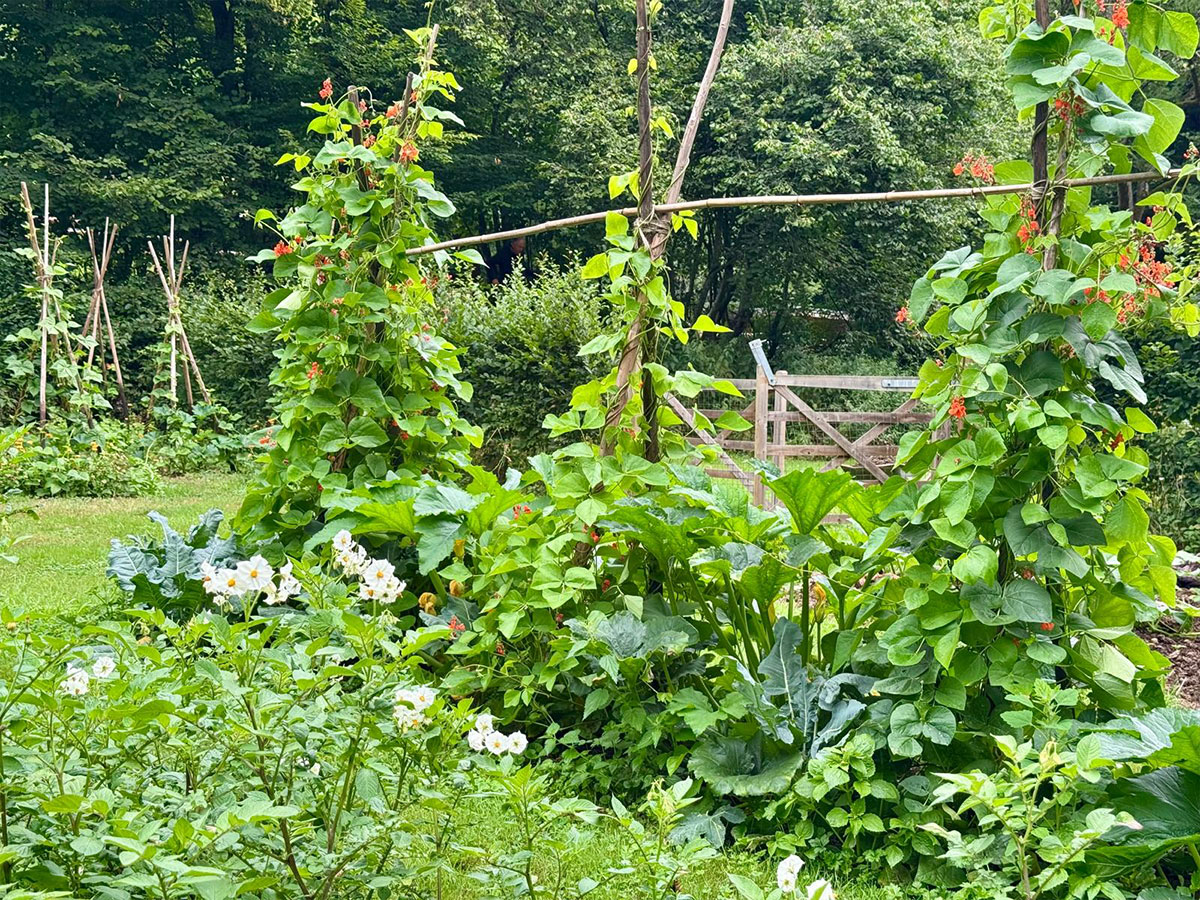
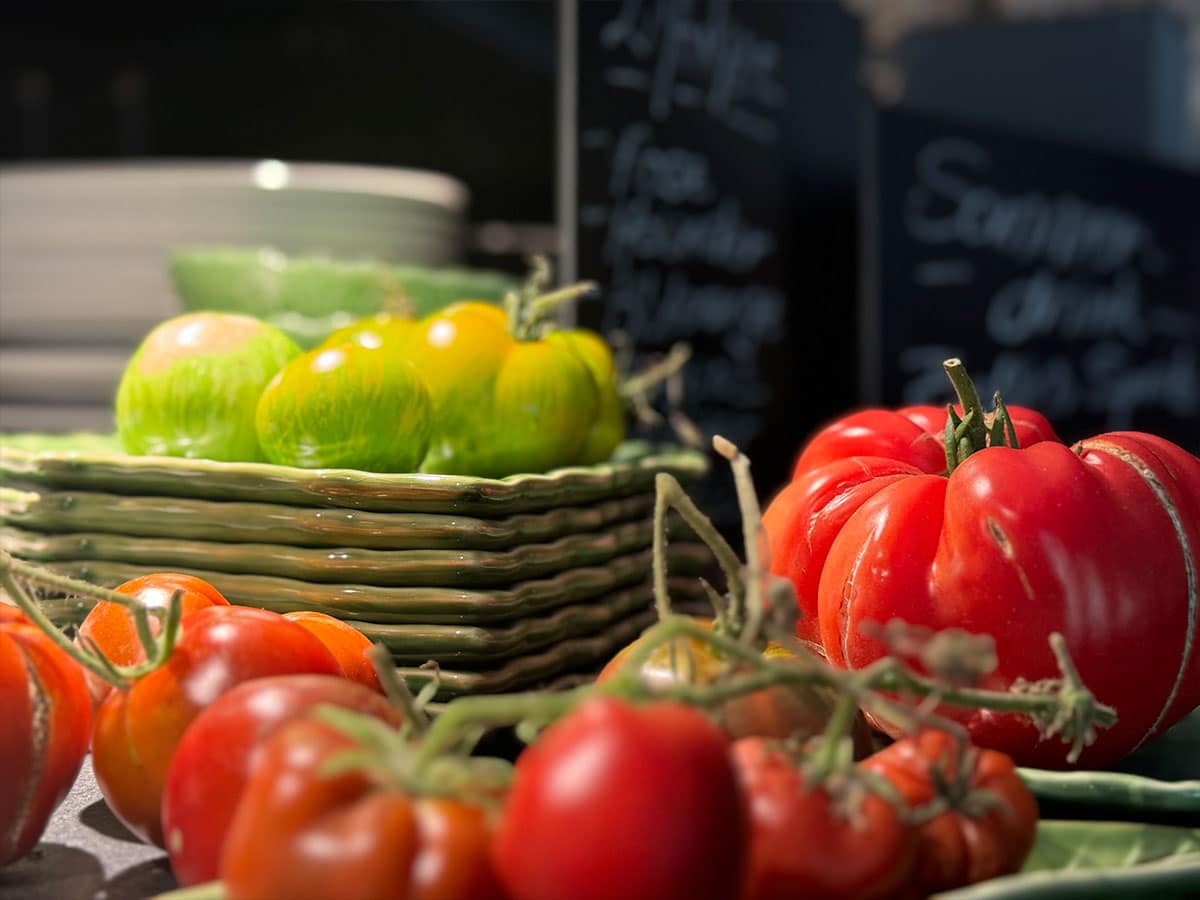
Soil under your fingers. Tomatoes that taste of summer. Herbs that release their scent as you brush past. Roland tends his beds with patience – fertilising them with compost, manure from the donkeys and hens, and a liquid feed he makes himself. Not always perfect – but the flavour is honest.
What grows here makes its way into Jean-Paul's kitchen. Freshly picked, a short journey, prepared with care. Sometimes only a few hours pass between bed and plate.
The way we do things
As much of our own produce as possible – seasonal, honest. What the garden yields, what the season brings. No excess – just flavour that tells you where it comes from.
Our toiletries come from Saint Charles, a 150-year-old Viennese apothecary – paraben-free, in large dispensers rather than single-use bottles.
The Löffelmühle has its own spring. For centuries it has supplied the house with fresh water and fed the fountain in the courtyard. The water is officially tested on a regular basis – with very good results. Whatever is left flows back into the Elz.